


NEW DELHI: (Feb 22) The Supreme Court is slated to hear on Monday pleas of Meta and WhatsApp against a Competition Commission of India (CCI) order imposing a penalty of Rs 213.14 crore over their privacy policy.
A bench comprising Chief Justice of India (CJI) Surya Kant and Justices Joymalya Bagchi and Vipul M Pancholi is likely to hear the matter.
On February 3, the bench had made strong observations against Meta Platforms Inc and WhatsApp, saying they could not “play with the right to privacy of citizens in the name of data sharing” and alleged that they were creating a monopoly in the market and committing theft of private information of customers.
NEW DELHI: (Feb 12) Over 13 per cent of heart failure cases among people living with diabetes in India could be linked to physical inactivity, a global study has estimated.
The findings, published in the Journal of Sport and Health Science, also show that 9.6 per cent of coronary heart disease and 9.4 per cent of cardiovascular complication cases among people living with diabetes in India could be attributed to lack of physical activity.
Globally, one in ten cases of macrovascular (large blood vessel) complications and retinopathy in people with diabetes is due to physical inactivity, researchers said.
KOZHIKODE (KERALA): (Feb 13) A Kerala court on Friday sentenced a 62-year-old man to six years rigorous imprisonment for molesting a class two student at a wedding hall near Perambra here nearly six years ago.
Nadapuram Fast Track Special Court judge Devan K Menon convicted and sentenced the accused for the offence of molestation under the IPC and also imposed a fine of Rs 10,000 on the convict, special public prosecutor Manoj Aroor said.
According to the prosecutor, the incident occurred on April 17, 2019 at a wedding hall near Perambra.
KANPUR: (Feb 13) A local court on Friday directed police to conduct a technical and mechanical inspection of the Lamborghini car involved in the high-profile crash that left several people injured on VIP Road earlier this week, and submit a detailed report before the next hearing on February 20.
Additional Chief Judicial Magistrate (ACJM) Amit Singh instructed the Gwaltoli SHO to examine the high-end car bearing the registration number DL11CF4018, and complete all required formalities.
The court also sought a compliance report along with the case file.
LUCKNOW: (Feb 13) Justice Pankaj Bhatia of the Lucknow bench of the Allahabad High Court on Friday recused himself from hearing bail pleas, saying certain recent observations made by the Supreme Court had a “huge demoralising and chilling effect” on him.
The judge declined to hear a bail plea filed by Rakesh Tiwari, and urged the high court chief justice to withdraw the bail roster from him.
“Although it is well known that there is no judge who can claim that his order has never been set aside or interfered with, I also feel from the perusal of the judgment of the Supreme Court that the bail order granting bail was apparently subject to interference.
By PMC Akbar Jiwani, Chief Special Correspondent February 14, 2026
MUMBAI — As India marches toward the end of the decade, the urban landscape is
undergoing a seismic shift. The concept of “home” in our metropolitan cities is being redefined not by new land acquisition, but by the vertical transformation of existing footprints. The redevelopment of Cooperative Housing Societies (CHS) has moved from being a mere alternative to becoming the primary engine of urban renewal in cities like Mumbai, Pune, and Delhi.
By 2030, experts predict that nearly 60% of Mumbai’s residential supply will come from redevelopment projects. This transition represents more than just construction; it is a socio-economic evolution that promises to upgrade the lifestyle of millions of middle-class Indian families while addressing the acute shortage of urban land.
Current State of Housing Societies
Currently, thousands of housing societies built between the 1970s and 1990s are reaching the end of their structural lifecycle. These buildings often lack modern amenities, elevators, and adequate parking. While the urge to redevelop is strong, the process has historically been marred by regulatory bottlenecks, lack of transparency, and stalled projects. However, the last two years have seen a marked improvement in regulatory frameworks, specifically with the introduction of stricter RERA compliance norms for redevelopment projects.
Vision 2030: Key Trends and Predictions
Looking ahead to 2030, the redevelopment sector is poised for standardization and professionalization. We anticipate a shift away from individual building redevelopment toward “Cluster Development.” This approach allows for larger land parcels to be developed simultaneously, enabling better infrastructure planning, wider roads, and shared community amenities that standalone buildings cannot support.
Technological Integration
The housing societies of 2030 will be fundamentally “smart.” Redevelopment is no longer just about fresh concrete; it is about digital infrastructure. Future projects will standardly include:
IoT-enabled Building Management Systems (BMS) for predictive maintenance of
elevators and water pumps.
Smart Metering for water and electricity to ensure pay-per-use transparency.
Automated Parking Towers to maximize space utilization in congested neighborhoods.
Self-redevelopment is emerging as a powerful model, giving residents greater control over their future homes.
Sustainability and Green Building
With India’s commitment to net-zero targets, the government is incentivizing green redevelopment. By 2030, it is expected that new occupancy certificates will mandate strict adherence to green building codes. This includes mandatory on-site sewage treatment plants (STP), solar rooftop power generation for common areas, and rainwater harvesting systems that are functional, not just ceremonial.
Policy Framework and Self-Redevelopment
A significant trend gaining momentum is Self-Redevelopment. Instead of handing over land rights to a builder, societies are increasingly appointing their own project management consultants (PMCs) and contractors. This model allows members to retain the surplus profit that would otherwise go to a developer.
To support this, state governments are expected to introduce “Single Window Clearance” specifically for self-redevelopment projects by 2028, drastically reducing the approval timeline from 24 months to under 9 months.
Challenges and Opportunities
Despite the optimistic outlook, challenges remain. The rising cost of raw materials and labor shortages could squeeze profit margins, making smaller plot redevelopments unviable. Additionally, the temporary rehabilitation of residents during the 3-4 year construction phase remains a logistical nightmare in crowded cities.
However, the opportunities outweigh the risks. For the real estate industry, redevelopment offers a sustainable pipeline of projects in prime locations where vacant
land is non-existent. For residents, it offers a chance to unlock the true asset value of
their property, often resulting in a 25-40% increase in carpet area and a modernized lifestyle.
Conclusion
As we approach 2030, the redevelopment of housing societies will cease to be a chaotic gamble and evolve into a streamlined industry. It is the only viable path for India’s aging metros to renew themselves. For managing committees and residents, the message is clear: the future belongs to those who educate themselves, unite their members, and embrace professional guidance to navigate this transformation.
ABOUT THE AUTHOR
PMC Akbar Jiwani is the Chief Special Correspondent for RealNewsOfIndia.com. With over two decades of experience in the real estate sector, he specializes in cooperative housing society laws, project management, and urban redevelopment trends. He is a frequent speaker at housing forums and an advocate for transparency in the Indian real estate market.
A Delhi court on Monday sent three people arrested in a case related to alleged irregularities in the Delhi Waqf Board recruitment, also involving AAP MLA Amanatullah Khan, to the ED custody till Nov 16.
Special Judge Arvind Kumar sent the accused persons — Zeeshan Haider, Daud Nasir and Jawed Immam Siddiqui — to the custody of the Enforcement Directorate on an application moved by the central probe agency.
The application was opposed by Advocate Nitesh Rana, appearing for the accused, who claimed that their arrest was illegal. PTI.
The Supreme Court on Wednesday sought responses from the Centre and the Election Commission on a PIL seeking voting rights for non-resident Indians (NRIs) in polls here.
A bench comprising Chief Justice N V Ramana and Justices J K Maheshwari and Hima Kohli took note of the PIL filed by the Kerala Pravasi Association that the NRIs be given the voting rights.
The top court issued notices and ordered the tagging of the PIL with pending ones on the issue.PTI
The Supreme Court on Wednesday said the petitions filed by the Shiv Sena and its rebel MLAs raise many constitutional questions which require consideration by a larger bench.
A bench headed by Chief Justice N V Ramana directed the parties to formulate issues which require examination by a larger bench by July 27.
“After hearing the counsels it has been agreed that some issues may, if necessary, be referred to a larger bench also. Keeping in mind the same, to enable the parties to frame the issues, let them file the same preferably by next Wednesday,” the bench also comprising Justices Krishna Murari and Hima Kohli said.
The matter will now be heard on August 1.
The bench also comprising justices Krishna Murari and Hima Kohli was hearing five pending peas about the recent political crisis in Maharashtra that led to the fall of the Maha Vikas Aghadi government in the state.
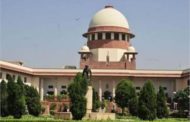
A plea has been filed in the Supreme Court seeking directions to the Centre to ascertain the feasibility of enacting a stringent population control law to secure fundamental rights for citizens.
The plea filed by spiritual orator Devkinandan Thakur said there is a need to control the population explosion to secure the basic rights of the citizens as this is the root cause of all the problems.
“The facts constituting the cause of action accrued on December 10, 2020, when the Centre said that it is against the forcing of family planning and won’t take coercion action. Centre passed its obligation though ‘Population Control & Family Planning’ is mentioned in the concurrent list. Hence Centre can make laws and regulation policies to control population explosion, which is the biggest menace to democracy and socio-economic development. It has not even drafted a Bill till date.
“The injury caused to citizens, particularly women, is extremely large. The perils of population explosion on the economy and its ramifications are often discussed. But, the impact that repeated childbearing has on women are seldom highlighted outside the niche areas. Incidence of grand multiparity, which is defined as more than 4 viable births, in developing countries like India is 20 per cent while it is only 2 per cent in developed countries,” the plea filed through advocate Ashutosh Dubey said.
The plea has submitted that the right to clean air, drinking water, health, and livelihood guaranteed under Articles 21-21A, can’t be secured to all citizens without effective population control.
It has also sought directions to the Law Commission of India to examine the population control laws and population control policies of the developed countries and suggest steps in order to secure the fundamental rights.
The Centre in another petition had earlier told the top court that India is unequivocally against forcing family planning on its people and any coercion to have a certain number of children is counter-productive and leads to demographic distortions.
In an affidavit filed in the top court, the health ministry had said that the family welfare programme in the country is voluntary in nature, which enables couples to decide the size of their family and adopt family planning methods best suited to them, according to their choice and without any compulsion.
The submission was made in response to a PIL filed by lawyer Ashwini Kumar Upadhyay challenging a Delhi High Court order that dismissed a plea seeking certain steps, including the two-child norm, to control the country’s growing population.








Recent Comments