



The White House and its GOP allies appear to be retreating from their opposition to a USD 600-per-week supplemental unemployment benefit that has propped up the economy and family budgets but expired Friday.
President Donald Trump is eager to extend the benefit, undercutting his GOP allies on Capitol Hill who have spent considerable effort devising an alternative that could unite Republicans.
The unemployment insurance is a principal element as talks continue on a COVID-19 relief bill, which is expected to grow considerably from a 1 trillion-plus GOP draft released this week.
Top Democrats announced a meeting with administration representatives for Saturday morning after Thursday night talks at the Capitol failed to produce a breakthrough.
The two sides took their case to the media Friday morning, with White House chief of staff Mark Meadows speaking to reporters on short notice at the exact moment House Speaker Nancy Pelosi appeared at her weekly news conference.
Meadows accused Democrats of refusing to negotiate, saying Trump has instructed him to be aggressive and forward-leaning in trying to extend the supplemental jobless benefit.
Democrats have made zero offers over the last three days, said Meadows, an inexperienced negotiator and former tea party lawmaker. He said Democrats are willing to play politics” and are acting like they hold all the cards.
The White House on Thursday offered a one-week extension of the 600 weekly unemployment benefit, top Democrats said, but Pelosi rejected it, saying it needs to be addressed as part of a far more sweeping bill that would deliver aid to state and local governments, help for the poor and funding for schools and colleges to address the pandemic.
Without action, the unemployment benefit ran out Friday and both the House and Senate have left Washington.
“Clearly they did not understand the gravity of the situation, Pelosi said. She said a short-term extension only makes sense if the two sides are close to a deal.
Why don’t we just get the job done? she asked.
An aide familiar with the talks said Pelosi rejected an administration offer of a four-month extension of the benefit at 400 per week, combined with additional provisions for particularly hard-hit businesses and a shield against lawsuits for businesses, schools and other entities that reopen as the pandemic continues to rage.
The aide wasn’t supposed to divulge contents of the talks and spoke to The Associated Press on condition of anonymity.
Pelosi, brimming with confidence, offered a tutorial on negotiating Friday.
There are two things to remember. One is the person you’re negotiating with has to want something for the American people, Pelosi said. And they have to know you will walk if you don’t get a good enough agreement.
Republicans in the Senate had been fighting to trim back the 600 jobless benefit in the next coronavirus package, but their resolve weakened as the expiration of the popular benefit neared and as Trump undercut their position by signaling he wants to keep the full 600 benefit for now.
We want a temporary extension of enhanced unemployment benefits,” Trump said at the White House on Thursday. This will provide a critical bridge for Americans who lost their jobs to the pandemic through no fault of their own.
On Friday, Trump took to Twitter to explicitly endorse extending the 600 payment and to criticize top Senate Democrat Chuck Schumer.
Very disappointed in @SenSchumer for blocking the temporary extension of the 600 unemployment benefits. The Do Nothing Democrats are more interested in playing politics than in helping our deserving people, Trump tweeted.
There continues to be agreement among Washington’s top power players that Congress must pass further relief in the coming days and weeks.
Do we want to continue to come to an agreement? Absolutely,” Schumer said.
But it’s got to meet the gravity of the problem. Democrats hold a strong negotiating hand exploiting GOP divisions over whether more aid is even needed and they are expected to deliver a necessary trove of votes.
Both sides say the talks have not produced much progress, but they could be nearing a critical phase over the weekend and into next week. The pending COVID-19 rescue bill, the fifth since the pandemic has struck, is likely the last one before the November election.
Republicans controlling the Senate have kept the relief measure on pause in a strategy aimed at reducing its price tag. But as the pandemic has worsened in past weeks and as fractures inside the GOP have eroded the party’s negotiating position Republicans have displayed some greater flexibility.
The Democrats are playing for Nov. 3, and we’re playing for the good of the people. It is a disgrace that they are not negotiating, Trump said Friday.
I think it’s a bad political game. I think it hurts them. Also at issue in the negotiations is an almost 1 trillion Democratic demand for funding for state and local governments, a second 1,200 direct payment to most American adults, more than 100 billion to help schools reopen and a liability shield measure that is essential to Senate Majority Leader Mitch McConnell, R-Ky.

Air France and regional subsidiary Hop announced 7,500 job cuts Friday after the virus pandemic grounded most flights and darkened prospects for future air travel.
Activists from multiple unions protested at Air France headquarters at Paris’ Charles de Gaulle Airport as talks began Friday morning about future job prospects at France’s flagship airline.
They’re particularly angry that the French government didn’t require Air France to protect jobs when it won 7 billion euros ( 8 billion) in state bailout funds in May.
Workers warned that the job cuts will ripple across the French economy, and said bailout funds should be used to rebuild the company instead of pushing people into unemployment.
After a day of talks with personnel representatives, company management announced Friday night that it will cut about 6,500 of 41,000 jobs at Air France and 1,000 of the 2,400 jobs at Hop by 2022.
The company said most of the losses will come through not replacing retiring and departing workers and that it would encourage voluntary departures and early retirements before imposing layoffs.
Airlines around the world are forecast to lose 84 billion this year, with revenue halved. Some have filed for bankruptcy or sought bailouts to survive the near-shutdown in their activity, and officials predict the industry will take years to recover.
It’s too easy to take COVID-19 as an excuse, said Julien Lemarie, a 35-year-old Hop mechanic demonstrating at the airport.
The scale of this plan it’s enormous, it’s an absolute sledgehammer blow. Air France said its traffic sank 95% over the worst three months of the coroavirus pandemic and it was losing 15 million euros a day and that it doesn’t expect to recover until 2024.
The airline argued that the state bailout would allow it to withstand the short-term crisis and help it focus on changing its domestic business model and becoming more environmentally responsible.
The 7 billion euros in state aid for Air France is in the form of loans and loan guarantees and part of a broader 15 billion euro rescue plan from the government for the aviation sector.
The Air France meetings come days after European aircraft manufacturer Airbus, based in France, said that it must eliminate 15,000 jobs to safeguard its future.PTI

Heavy rain in southern Japan triggered flooding and mudslides on Saturday, leaving more than a dozen missing and others stranded on rooftops waiting to be rescued.
More than 75,000 residents in the southern prefectures of Kumamoto and Kagoshima were asked to evacuate following pounding rains overnight.
NHK television footage showed large areas of Hitoyoshi town in Kumamoto inundated in muddy waters that gushed out from the Kuma River. Many cars were submerged up to their windows.
Mudslides smashed into houses and floodwaters carried trunks from uprooted trees. Several people were standing atop a convenience store as they waited for rescuers.
NHK said about 13 people were reported missing. Kumamoto officials say they were still assessing the extent of damage.
Prime Minister Shinzo Abe set up a task force, vowing to do utmost to rescue the missing.
The Japan Meteorological Agency earlier issued warnings of extraordinary rain in parts of Kumamoto, about 1,000 kilometers (600 miles) southwest of Tokyo, but later downgraded them as the rainfall estimated at 100 milimeters (4 inches) per hour subsided.
Kumamoto Gov. Ikuo Kabashima said he requested help from the Japan Self-Defense Forces.
China under President Xi Jinping has stepped up its “aggressive” foreign policy toward India and “resisted” efforts to clarify the Line of Actual Control that prevented a lasting peace from being realised, according to a report released by a US Congress appointed commission.
The armies of India and China have been locked in a bitter standoff at multiple locations in eastern Ladakh for the last seven weeks, and the tension escalated after 20 Indian soldiers were killed in a violent clash in the Galwan Valley on June 15.
Under General Secretary of the Chinese Communist Party (CCP) Xi Jinping, Beijing has stepped up its aggressive foreign policy toward New Delhi. Since 2013, China has engaged in five major altercations with India along the Line of Actual Control (LAC), said a brief issued by US-China Economic and Security Review Commission.
“Beijing and New Delhi have signed a series of agreements and committed to confidence-building measures to stabilise their border, but China has resisted efforts to clarify the LAC, preventing a lasting peace from being realised, said the report and was prepared at the request of the Commission to support its deliberations.
Authored by Will Green, a Policy Analyst on the Security and Foreign Affairs Team at the Commission, the report says that the Chinese government is particularly fearful of India’s growing relationship with the United States and its allies and partners.
The latest border clash is part of a broader pattern in which Beijing seeks to warn New Delhi against aligning with Washington, it said.
After Xi assumed power in 2012, there was a significant increase in clashes, despite the fact that he met Prime Minister Narendra Modi several times and Beijing and New Delhi have agreed to a series of confidence-building mechanisms designed to mitigate tensions.
Prior to 2013, the last major border clash was in 1987. The 1950s and 1960s were a particularly tense period, culminating in 1962 with a war that left thousands of soldiers dead on both sides, according to the records of China’s People’s Liberation Army, the report said.
The 2020 skirmish is in line with Beijing’s increasingly assertive foreign policy. The clash came as Beijing was aggressively pressing its other expansive sovereignty claims in the Indo-Pacific region, such as over Taiwan and in the South and East China seas, it said.
China is engaged in hotly contested territorial disputes in both the South China Sea and the East China Sea. Beijing has built up and militarised many of the islands and reefs it controls in the region. Both areas are stated to be rich in minerals, oil and other natural resources and are vital to global trade.
China claims almost all of the South China Sea. Vietnam, the Philippines, Malaysia, Brunei and Taiwan have counter claims over the area.
Several weeks before the clash in the Galwan Valley, Chinese Defence Minister Wei Fenghe called on Beijing to use fighting to promote stability as the country’s external security environment worsened, a potential indication of China’s intent to proactively initiate military tensions with its neighbours to project an image of strength, the report said.PTI

Vuln!! Path it now!!

Vuln!! Path it now!!


Hacked By Kaizer Soze/Turkish Hacklab.
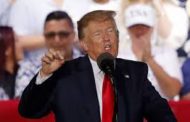
The US has “passed the peak” on new coronavirus cases, President Donald Trump has said and predicted that some states would reopen this month.
The US has over 637,000 confirmed Covid-19 cases and over 30,826 deaths, the highest for any country in the world.
At the daily White House coronavirus briefing on Wednesday, Trump said new guidelines to reopen the country would be announced on Thursday after he speaks to governors.
“We’ll be the comeback kids, all of us,” he said. “We want to get our country back.”
The Trump administration has previously fixed May 1 as a possible date to reopen the world’s largest economy, but the president said some states may be able to return to normalcy earlier than that.
“The battle continues, but the data suggest that nationwide we have passed the peak on new cases. Hopefully, that will continue, and we will continue to make great progress,” Trump said.
These encouraging developments, he said, has put the US in a very strong position to finalise the guidelines for states on reopening the country.
“Hopefully that will continue, and we will continue to make great progress,” Trump said.
Dr Deborah Brix, a member of the White House Task Force on Coronavirus, said that over the last five or six days there has been decline in new cases across the country.
“This has been very reassuring for us. At the same time, we know that mortality and the fatalities that we are facing across the United States continue,” she said.
Nine states have less than 1000 cases and less than 30 new cases per day. Some states like California and Washington State, Oregon never really had a peak because of so much work that their populations did to decrease and keep the new cases down, she said.
Two states, Rhode Island and Providence are in a unique situation, she said. First, they had increasing cases from the New York City area and now they have new increasing cases from the Boston area. They are caught between two incredible hotspots in the country, she said.
Reiterating that this is a highly contagious virus, Brix said in social gatherings and coming together there is always a chance that asymptomatic person can spread the virus unknowingly.
No one is intending to spread the virus. We know if you are sick you will stay home. But to all of you that are out there that would like to join together and just have that dinner party for 20 don’t do it yet. Continue to follow the presidential guidelines. We really appreciate the work of the American people,” Brix said.
Asked why the US accounted for such a significant proportion of the global death toll of 136,908, Trump accused other countries of lying about their mortality rate.
“Does anybody really believe the numbers of some of these countries?” he said, in an apparent reference to China where the pandemic originated and spread across the world.
Noting that this has been a horrible time to see such death and destruction in the country, the President said the medical and healthcare advances the US has made are critical to the continued progress.
The US has rapidly developed the most expansive and accurate testing system anywhere in the world and have completed more than 3.3 million tests.
“To date, we have authorised 48 separate coronavirus tests and the FDA is working with 300 companies and labs to widen our capacity still further,” Trump said.
The Abbott Labs on Wednesday announced that it is has developed an antibody test that will determine if someone has been previously infected with the coronavirus and potentially developed immunity.
“It is a great test. The company says these tests could be available to screen up to 20 million people in a matter of weeks,” he added.
The administration, he said, is also distributing vast amounts of medical supplies to states across the country. Through project air bridge, which has been an amazing success they have completed 44 flights, and an additional 56 like scheduled in the near future. he said.
In total, through all channels, the federal government has developed and delivered 39.4 million N95 masks, 431 million gloves, 57 million surgical masks and 10.2 million gowns. It ordered 500 million masks and they will be coming shortly and have distributed 100 million masks, he said.
Trump said his administration is using every available authority to accelerate the development, study and develop therapies and treatments.
“Ultimately, what we want to come up with is a safe vaccine, but frankly, the therapies to me are the most important because it takes care of people right now,” he said.
“The vaccines have to be tested because it takes a longer period of time, but we have some great potential therapies already, and we will see how they are working. We will be able to report on that over the next week or two,” he said, adding that at least 35 clinical trials of promising therapies are now underway.

Hollywood star Tom Hanks says he and his wife, singer-songwriter Rita Wilson are back home in the US after undergoing self-quarantine in Australia.
The Oscar winner on Saturday took to social media to share an update.
“We’re home now, and like the rest of America, we carry on sheltering place and social distancing,” Hanks, 63, tweeted Saturday.
The couple, who tested positive for the novel coronavirus in February, spent a week in isolation at a hospital in the state of Queensland in Australia.
After their discharge from the medical facility, Hanks and Wilson, 63, continued to self-quarantine at a rented home in Australia, often sharing their experience on isolation and offered advice to those doing the same via social media.
Hanks expressed gratitude to the people in Australia who took care of them.
“Many, many thanks to everyone in Australia who looked after us. Their care and guidance made possible our return to the USA. And many thanks to all of you who reached out with well wishes. Rita and I so appreciate it,” the actor wrote.
Last week, Hanks said he and Wilson felt “better” two weeks after coronavirus symptoms began.
Hanks was in Australia for the pre-production of Baz Luhrmann’s untitled Elvis Presley film, whereas Wilson performed at Sydney’s iconic Opera House.
Warner Bros suspended the production on the film, starring Austin Butler in the lead, till further notice.
Other film and television production around the world were shut down following the spread of COVID-19.










Recent Comments