




By Wellett Potter, University of New England
LONDON: (Feb 4) Would you create an interactive “digital twin” of yourself that can communicate with loved ones after your death?
Generative artificial intelligence (AI) has made it possible to seemingly resurrect the dead. So-called griefbots or deathbots – an AI-generated voice, video avatar or text-based chatbot trained on the data of a deceased person – proliferate in the booming digital afterlife industry, also known as grief tech.
Deathbots are usually created by the bereaved, often as part of the grieving process. But there are also services that allow you to create a digital twin of yourself while you’re still alive. So why not create one for when you’re gone?

NAGPUR: (Feb 4) The Yavatmal district of eastern Maharashtra recorded 21 farmer suicides in January, an activist said on Wednesday, accusing the government of failing to deal with the agrarian crisis.
Kishore Tiwari, former chairman of the state government’s Vasantrao Naik Sheti Swavlamban Mission (VNSSM), shared an official list of the farmers who allegedly died by suicide in the district last month.

PESHAWAR: (Feb 4) Armed militants abducted a police constable from his residence and later shot him dead in Pakistan’s Khyber Pakhtunkhwa province on Wednesday, police said.
The attackers raided the house of Constable Dastgir in the Nasar Khel area on the outskirts of Sarai Naurang tehsil in Bannu district, officials said.
The assailants subjected women, children and elderly family members to violence, set the house on fire and held the family hostage before forcibly taking the constable away.
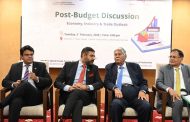
Mumbai | 3 February 2026
By: Real News of India
World Trade Center Mumbai, in association with the All India Association of Industries (AIAI), organised a Post-Budget Discussion Session to deliberate on the implications of the Union Budget 2026–27 for MSMEs, trade, industry, exports, and India’s long-term economic growth trajectory. The event brought together industry leaders, exporters, professionals, policy observers, and diplomats to analyse key budget announcements and their impact on the economy.
Speaking at the session, Mr. Siddhartha Rastogi, Principal Officer, Managing Director & Chief Operating Officer, Ambit Asset Management, stated that the Union Budget lays a clear roadmap for the coming years. Emphasising inclusive growth, he said that achieving a GDP growth rate of 7.2 percent requires strengthening India’s 6 crore MSMEs, which form the backbone of the economy. He highlighted that linking government spending with the TReDS platform would unlock liquidity and enhance order books for MSMEs, while promotion of digital payments and securitisation would improve credit flow and prevent capital from being stuck in the system.
Mr. Rastogi also welcomed the government’s focus on critical minerals and rare earth elements, noting that such initiatives would ensure stable supply chains, strengthen Atmanirbharta, and safeguard the economy from geopolitical risks.
Explaining indirect tax-related changes, Mr. Pranav Prakash Mehta, Partner, KJM INC and Specialist in Indirect Taxation, said that while the Budget did not introduce major taxation reforms, minor amendments would significantly improve ease of doing business. He noted that changes related to post-supply discounts would increase supplier accountability and ultimately benefit customers. He further added that clarifications on supply invoicing and invoice discounting would reduce litigation and speed up resolution of long-pending tax matters.
Sharing insights on direct taxation proposals, Mr. Arun Kumar Garodia, Former ITAT Member and Income Tax Consultant, said that the tax holiday announced for data centres would attract capital flows into new-age technology investments and strengthen India’s long-term investment climate. He added that changes in the taxation of share buybacks—now to be taxed under capital gains—would benefit both industry and shareholders. Reforms in Minimum Alternate Tax (MAT) and the decriminalisation of certain tax defaults, he said, reflect the government’s trust in the business community and promote a more collaborative growth environment.
Addressing the gathering, Dr. Vijay Kalantri, Chairman, World Trade Center Mumbai and President, All India Association of Industries, stated that the Budget provides a strong roadmap for achieving Viksit Bharat by 2047. He said that incentives for data centres, focused support for technology-driven industries, and policy clarity would help India move towards a USD 10 trillion economy by 2030. He also emphasised that simplification of taxes and resolution of legacy issues would significantly enhance ease of doing business in the country.
The annual Post-Budget Discussion at World Trade Center Mumbai witnessed participation from over 150 business leaders, MSMEs, innovators, and diplomats from several countries. The session concluded with Capt. Somesh Batra, Vice Chairman, World Trade Center Mumbai, delivering the vote of thanks.
Keir Starmer, the Labour Party leader on track to be the UK’s new prime minister, on Friday thanked voters and said the people of the country are “ready for change” and to “end the politics of performance”.
Starmer, 61, in his victory speech after winning from Holborn and St Pancras, said whether people voted for him or not, “I’ll serve every person in this constituency.”
According to the exit poll, which is often quite close to the final tally, Labour could win as many as 410 seats, comfortably crossing the half way 326 mark and notching up a 170-seat majority with the incumbent Tories led by Prime Minister Rishi Sunak down to just 131 seats. pti
Coordinated efforts are being made to evacuate the stranded workers at the earliest from the Silkyara tunnel collapse site in Uttarakhand, the Ministry of Road Transport & Highways said on Monday.
At least 40 workers got trapped after a portion of the tunnel under construction between Silkyara and Dandalgaon on the Brahmakhal-Yamunotri national highway collapsed in the early hours of Sunday.
As part of the Chardham Mahamarg Pariyojana, the road transport and highway ministry has taken up the construction of 4.531-kilometre two lane bi-directional tunnel at Silkyara to join Gangotri and Yamunotri axis under the Radi pass in Uttarakhand and sanctioned for TPC (total project cost) of Rs 1,383 crore on March 9, 2018 for implementation by its company National Highways & Infrastructure Development Corporation Limited (NHIDCL).
Ukrainian President Volodymyr Zelenskyy is due to host the UN chief and Turkey’s leader Thursday for talks on the recent deal to resume Ukraine’s grain exports, the volatile situation at a Russian-occupied nuclear power plant and efforts to help end the nearly six-month-old war.
UN Secretary-General Ant nio Guterres arrived Wednesday in Lviv, near Ukraine’s border with Poland, where he will meet Zelenskyy and Turkish President Recep Tayyip Erdogan.
UN deputy spokesman Farhan Haq said that among other issues, Guterres will discuss “his overall efforts to do what he can to essentially lower the temperature as much as possible with the various authorities.
Last month, Turkey and the UN helped broker an agreement clearing the way for Ukraine to export 22 million tons of corn and other grain stuck in its Black Sea ports since Russia invaded February 24.
A separate memorandum between Russia and the UN aimed to clear roadblocks to shipments of Russian food and fertilizer to world markets.
The war and the blocked exports significantly exacerbated the global food crisis because Ukraine and Russia are major suppliers.
Grain prices peaked after Russia’s invasion, and while some have since returned to prewar levels, they remain significantly higher than before the COVID-19 pandemic.
Developing countries have been hit particularly hard by supply shortages and high prices. Even though ships are now leaving Russia and Ukraine, the food crisis hasn’t ended.
UN spokesman Stephane Dujarric told reporters this week that Guterres’ trip to Ukraine will allow him to see first-hand the results of an initiative that is so critically important to hundreds of millions of people.
Dujarric added that he expects the need for a political solution to the war to be raised in Thursday’s talks.
He said the three leaders will also discuss the situation at the Russian-controlled Zaporizhzhia nuclear power plant in southern Ukraine, Europe’s largest, which Moscow and Kyiv have accused each other of shelling.
In his nightly video address Wednesday, Zelensky reaffirmed his demand for the Russian military to leave the plant, emphasizing that only absolute transparency and control of the situation at and around the Zaporizhzhia nuclear power plant for the Ukrainian state, for the international community, and for the IAEA can guarantee a gradual return to normal nuclear safety. The International Atomic Energy Agency is a UN agency.
Russia has rejected the demand.
Erdogan’s office has confirmed that he would discuss the grain deal during the talks as well as ways to end the war through diplomatic means.
Earlier this month, the Turkish leader met on the same issues with Russian President Vladimir Putin.
In March, Turkey hosted a round of talks between Russian and Ukrainian negotiators, who discussed a possible deal to end the hostilities. The talks fell apart after the meeting in Istanbul, with both sides blaming each other.
Erdogan has engaged in a delicate balancing act, maintaining good relations with both Russia and Ukraine. Turkey has provided Ukraine with drones, which played a significant role in deterring a Russian advance early in the conflict, but it has refrained from joining Western sanctions against Russia over the war.
Facing a major economic crisis with official inflation near 80 per cent, Turkey increasingly relies on Russia for trade and tourism. Russian gas covers 45 per cent of Turkish energy needs, and Russia’s atomic agency is building Turkey’s first nuclear power plant.
During their meeting in Sochi this month, Putin and Erdogan agreed to bolster energy, financial and other ties between their countries, raising concerns in the West that Ankara could help Moscow bypass the US and European Union sanctions. PTI
Vuln!! Path it now!!
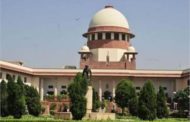
A plea has been filed in the Supreme Court seeking directions to the Centre to ascertain the feasibility of enacting a stringent population control law to secure fundamental rights for citizens.
The plea filed by spiritual orator Devkinandan Thakur said there is a need to control the population explosion to secure the basic rights of the citizens as this is the root cause of all the problems.
“The facts constituting the cause of action accrued on December 10, 2020, when the Centre said that it is against the forcing of family planning and won’t take coercion action. Centre passed its obligation though ‘Population Control & Family Planning’ is mentioned in the concurrent list. Hence Centre can make laws and regulation policies to control population explosion, which is the biggest menace to democracy and socio-economic development. It has not even drafted a Bill till date.
“The injury caused to citizens, particularly women, is extremely large. The perils of population explosion on the economy and its ramifications are often discussed. But, the impact that repeated childbearing has on women are seldom highlighted outside the niche areas. Incidence of grand multiparity, which is defined as more than 4 viable births, in developing countries like India is 20 per cent while it is only 2 per cent in developed countries,” the plea filed through advocate Ashutosh Dubey said.
The plea has submitted that the right to clean air, drinking water, health, and livelihood guaranteed under Articles 21-21A, can’t be secured to all citizens without effective population control.
It has also sought directions to the Law Commission of India to examine the population control laws and population control policies of the developed countries and suggest steps in order to secure the fundamental rights.
The Centre in another petition had earlier told the top court that India is unequivocally against forcing family planning on its people and any coercion to have a certain number of children is counter-productive and leads to demographic distortions.
In an affidavit filed in the top court, the health ministry had said that the family welfare programme in the country is voluntary in nature, which enables couples to decide the size of their family and adopt family planning methods best suited to them, according to their choice and without any compulsion.
The submission was made in response to a PIL filed by lawyer Ashwini Kumar Upadhyay challenging a Delhi High Court order that dismissed a plea seeking certain steps, including the two-child norm, to control the country’s growing population.

British stars Jessie Buckley and Riz Ahmed are set to featuure together in sci-fi romance film “Fingernails”.
Christos Nikou, best known for the 2020 Greek-language drama “Apples”, will direct the film from a script he penned with Sam Steiner and Stavros Raptis, reported Deadline.
Described as a grounded sci-fi love story”, the film is set in a world where a test has been discovered that measures whether couples are truly in love. To help couples succeed, love institutes have opened to guide them.
“Anna (Buckley) is skeptical of the positive result she’s received with her longtime partner, so she starts working in a love institute as an assistant to Trevor (Ahmed), a mysterious, dedicated instructor,” the official plotline read.
The project is backed by Oscar winner Cate Blanchett’s Dirty Films along with FilmNation Entertainment, which is also financing. Jerome Duboz will serve as an executive producer.
Buckley is known for her critically-acclaimed performances in movies such as “Wild Rose”, “Judy”, “I’m Thinking of Ending Things” and “The Lost Daughter”. She currently stars in Alex Garland’s “Men”.
Ahmed recently won an Oscar for best live action short film for “The Long Goodbye” and featured in Amazon movie “Encounter”.







Recent Comments