



The first tranche of 250 tonnes of onions imported by the government has already arrived while the entire consignment of 2,000 tonnes will arrive by the end of this week, which will help boost domestic supplies and check rising retail prices.
In the case of pulses, 3,223 tonnes have already arrived in both Mumbai and Chennai and by October 20, the entire quantity of 5,000 tonnes will reach India.
The Inter Ministerial Committee on Prices and Availability of essential food items reviewed the current prices and availability position of pulses and onions.
During the meeting it was informed that “the first tranche of 250 tonnes of imported onion has already arrived at JNPT, Mumbai, and by the end of the week, the entire quantity of 2,000 tonnes of onion will arrive”, the Food Ministry said in a statement.
It was also observed that wholesale prices of onions have moderated over the fortnight in major mandis.
These consignments are being allocated to states as per their requests, which is expected to help cool prices.
Prices of both pulses and onions rose unabated last month or so due to a fall in domestic production. Barring chana dal, prices of all other pulses have gone up to Rs 150 per kg in most retail markets.
Similarly, retail prices of onion had risen to Rs 70 per kg in Delhi and the same trend prevails in other parts of the country.

‘Make in India’ is highly relevant for the automobile industry
The Indian automobile industry is among the Top-5 industrial sectors in India, according to the Annual Survey of Industries – FY 2013, and engages almost 6% of the country’s manpower. The industry has grown steadily over the past decade driven by economic growth, rising per capita income, low penetration levels and improving accessibility. Over the past five years (i.e. FY 2011-15), the total production of automobiles, including tractors and mining & construction equipment, in India (including exports) have grown at a CAGR of 6.8%. Across segments of the industry, India is positioned amongst the leading markets, globally, providing adequate base for scale benefits in manufacturing.
In volume terms, India ranks as the largest market for two-wheelers as well as tractors. It is also among the Top-5 and Top-10 markets for Medium & Heavy Commercial Vehicles (M&HCVs) and Passenger Vehicles (PVs), respectively. Besides favourable growth prospects, India’s favourable Foreign Direct Investment (FDI) policy, relatively low cost of manufacturing, adequate manpower pool has also attracted several foreign original equipment manufacturers (OEMs) of the industry to invest in India and set-up manufacturing footprint. Today, virtually all the major foreign OEMs across segments of the industry have presence in the Indian market.
Exports form a key part of foreign OEMs plans for India
Apart from setting their eyes on the relatively untapped domestic potential, OEMs’ investments have also focused on leveraging India’s cost competitive manufacturing base and export vehicles out of India. In this context, the passenger vehicle OEMs have taken the lead so far. To give a perspective, till FY10, Maruti Suzuki and Hyundai accounted for over 95% passenger vehicle exports from India. However, over the past five years, their share has come down as OEMs like Ford, Nissan and Volkswagen (VW) have started exporting from India.
This trend is further supported by the fact that many of the OEMs are currently investing in new Greenfield facilities, even when the domestic market is yet to recover completely. Further, most of the incremental investments are coming up in locations like Gujarat and Andhra Pradesh which are closer to the ports. In ICRA’s estimates, nearly Rs 180 billion of Greenfield projects are currently in execution, or likely to start in the passenger vehicle segment alone. In the commercial vehicle segment, while there is only one Greenfield project under development (Rs 30 billion), most other OEMs are focusing on new model development again, with the focus on exports.
Foray of foreign OEMs have helped strengthened Indian auto component manufacturing base but we are still net importers
The foray of global automobile OEMs in India has also benefited the country’s auto component manufacturing industry. From encouraging the formation of joint ventures (with their foreign suppliers) to increasing the sourcing of components locally, foreign OEMs have played an important role in strengthening the capabilities of the Indian auto component manufacturers. As a result, many of the OEMs have managed to achieve fairly high level of localization (in some cases as high as 90%), and reduce dependence on costlier imported components over the past few years. This, coupled with the fact that some of them have also started sourcing components from Indian suppliers for their global requirements, is a reflection of the improving technical and quality standards of India suppliers.
While auto component exports have grown steadily over the past five years (i.e. 14%), India continues to be a net importer of auto components. We believe this scenario is primarily explained by three factors –
a) lack of an efficient ecosystem to support low-cost manufacturing of electronic components
b) continuation of dependence of OEMs (on their global suppliers) for certain high-value critical components like engine and transmission parts, airbags, etc. due to inadequate critical mass of select models, making domestic investments unviable, and
c) growing penetration of cheaper imported tyres, especially for the after-market segment.
India’s ‘Make in India’ campaign can help in encouraging local manufacturing of electronic-based components by offering fiscal incentives considering manufacturing of semi-conductors/electronics is generally capital intensive in nature.
The ‘Make in India’ campaign certainly a positive but needs to address a host of challenges
While the government’s ‘Make in India’ campaign is likely to attract investments from both domestic as well as foreign OEMs, the policy framework will have to encompass a comprehensive range of reforms to improve India’s attractiveness vis-à-vis other automobile hubs. Globally, most of the major automobiles hubs (i.e. Japan, South Korea, Mexico, etc.) have gained prominence not just on the back of favourable growth prospects locally, but also driven by export-friendly policies. Factors such as signing of Free Trade Agreements (FTAs), flexible labour reforms, transparent taxation policies and efficient infrastructure have collectively helped countries in emerging as global manufacturing hubs. In addition, strategic location in proximity to an important automobile market has also helped some nations in gaining competitive advantage. For instance, while Mexico exports almost 80% of the cars produced in the country, nearly two-third of those are sold in the United States.
In India, automobile OEMs have faced challenges due to inadequate availability of railway logistics, basic utilities, and the lack of clarity or changes in the tax regime. All of these factors have adversely impacted their cost structure. For instance, most of the vehicles are transported via roads in India, which adds to the logistics cost. In some cases, changes in taxation policies (like VAT incentive in Maharashtra, uncertainty in computation of excise duty) have delayed the break-even period for some OEMs. In addition, power shortages have also adversely impacted the cost of operations, especially for energy-intensive operations such as die-casting, forging etc. This has propelled both, OEMs and ancillaries to invest in renewable sources of energy and purchase power through energy exchanges. While the government’s focus on improving road, railway and power infrastructure will yield results only over a period of time, the industry could benefit from earlier resolution of labour and land acquisition reforms.
Implementation of GST would enable ease of doing business
India is also at the cusp of implementing the Goods & Services Tax (GST). If implemented in its current form, it will subsume all the applicable taxes and allow manufacturers to avail input tax credit across the value chain. With this, the proportion of the overall tax in a vehicle price may reduce from the current high level of 20-25%, depending on the GST rates finalized. Further, since majority of the sales of any OEM generally happen outside the native state, OEMs are unable to claim input tax credit on state levies for a large majority of their sales. This increases the cost for the end customers.
Additionally, GST will also help build a common India-wide market across the country instead of the state-specific markets that exist now. Accordingly, auto ancillaries and auto OEMs will not have the need to set-up smaller warehouses across multiple states but rather benefit from economies of scale at a few locations.
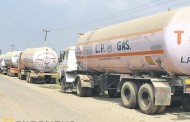
After trucks loaded remain stranded in the India Nepal border for more than two weeks as an alternative, Nepal is importing oil from China. Nepal is facing acute shortage of petrol with the country almost to a stand still.
The madheshi s in the terai region have blocked all goods from India enter into Nepal. The Madheshi people are mostly of Indian origin and is backed by India says Astha Shrestha a local businessman from Heatuda. When the rest of Nepal is rejoicing after the promulgation Madheshis are not happy as they say proper representation of the Madhshi people according to population is not addressed.
Dhan Bhadhur Thapa of Pokhra laments there is not a single madeshi in the Nepali history who has a significant contribution towards Nepal.
Ministry of Commerce and Supply has asked the Chinese government to supply petroleum products of Euro III standard.
In line with the plan to import petroleum products from the northern neighbour, the ministry on Friday dispatched a letter to the Chinese Embassy, stating the fuel specification. “Besides, the ministry has also been holding talks with Chinese representatives on economic viability of the import,” said a ministry official.
The government in 2012 implemented the Euro III emission standard for vehicles operating in the country.
Amid restrictions imposed by India on petroleum supply, the ministry is making preparations to import petroleum products from Tibet.
On Wednesday, the ministry held talks with Chinese Ambassador to Nepal Wu Chuntai on economic viability of fuel imports from China.
Besides, the ministry has also requested the Chinese side for speedy maintenance of the Rasuwagadhi- Keyrung trade route to resume bilateral trade.
The government has said the connecting roads on the Nepali side have been cleared.
by Govind Ghimire
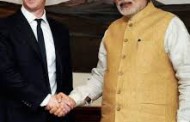
NEW DELHI: Facebook founder Mark Zuckerberg on Friday met Prime Minister Narendra Modi. The Facebook founder shed the casual attire he is usually seen in — jeans, t-shirt and sneakers, (hoodie optional) — and wore a dark suit for his meeting with the Prime Minister.
Soon after the meeting, Modi tweeted, “It was wonderful meeting Facebook CEO Mark Zuckerberg. We discussed a wide range of issues.”
On his first visit to India, Zuckerberg on Thursday met telecom minister Ravi Shankar Prasad to discuss expanding reach of internet including by using alternate technology.
“Connecting more than a billion people with internet is not only going to improve lives of people in India but helping innovation and imagination of Indian people will help turn around the world and we are very excited in opportunities in India,” Zuckerberg said after his meeting with the telecom minister.
“About 2.7 billion people have access to the internet. But that’s only one-third of humanity. Almost 4.5 billion people don’t use the internet,” pointed out Zuckerberg, in Delhi on a two-day visit to India. “Connectivity cannot just be a privilege of the rich and powerful. It is a human right.”
Zuckerberg had earlier said he was looking forward to meeting PM Narendra Modi. “I know that he has launched the Digital India initiative and we’re very excited about it. India has thousands of villages that don’t have access to a mobile network and Mr Modi is committed to bringing them online. I will spend a lot of time listening and learning about what we can do to help,” he said.
![Online [Free Watch] Full Movie The Mountain Between Us (2017)](http://www.realnewsofindia.com/wp-content/uploads/2015/09/375787-inflation-190x122.jpg)

The Mountain Between Us (2017)
| Release | : | 2017-10-05 |
| Country | : | United States of America |
| Language | : | English |
| Runtime | : | 109 |
| Genre | : | Romance,Adventure,Drama |

Synopsis
Watch The Mountain Between Us Full Movie Online Free. Movie ‘The Mountain Between Us’ was released in 2017-10-05 in genre Romance,Adventure,Drama.
Stranded after a tragic plane crash, two strangers must forge a connection to survive the extreme elements of a remote snow covered mountain. When they realize help is not coming, they embark on a perilous journey across the wilderness.
Streaming Movie The Mountain Between Us
(2017) Online
Incoming search term :
Watch The Mountain Between Us Full Movie Online Free Streaming In HD Quality, watch full The Mountain Between Us movie, Watch The Mountain Between Us 2017
Online Free Viooz, Watch The Mountain Between Us 2017 Online Free, Watch The Mountain Between Us 2017 Online Putlocker, film The Mountain Between Us
online, Streaming The Mountain Between Us 2017 For Free Online, streaming movie The Mountain Between Us 2017, The Mountain Between Us film trailer,
The Mountain Between Us movie trailer, live streaming film The Mountain Between Us 2017, Streaming The Mountain Between Us 2017 Online Free Megashare,
movie The Mountain Between Us streaming, Watch The Mountain Between Us 2017 For Free online, film The Mountain Between Us 2017 online streaming,
download The Mountain Between Us 2017 movie now, movie The Mountain Between Us 2017 download, watch full movie The Mountain Between Us 2017, trailer
film The Mountain Between Us 2017, Watch The Mountain Between Us 2017 Online 123movies, Watch The Mountain Between Us 2017 Online Free 123movie, Watch
The Mountain Between Us 2017 Online Free Putlocker, movie The Mountain Between Us 2017 trailer, Watch The Mountain Between Us 2017 Online Free
netflix, watch The Mountain Between Us film online now, The Mountain Between Us 2017 movie streaming, The Mountain Between Us 2017 Watch Online, Watch
The Mountain Between Us 2017 Online 123movie, download movie The Mountain Between Us, Watch The Mountain Between Us 2017 Online Free megashare, watch
The Mountain Between Us movie now, Watch The Mountain Between Us 2017 Online Free hulu, Watch The Mountain Between Us 2017 Online Viooz, live streaming
movie The Mountain Between Us 2017, The Mountain Between Us live streaming film online, movie The Mountain Between Us 2017, Watch The Mountain Between Us 2017 Online
Megashare.

Mumbai, Aug 27 (PTI) In keeping with the spirit of the Indian Handloom & Textile day at Lakme Fashion Week, designers Swati and Sunaina, Rinku Sobti, Shruti Sanchet, and Swati Vijaivargaie along with Bollywood actresess Gauhar Khan, Lisa Haydon, Vidya Malwade today celebrated the rich heritage of hand-woven luxury.
The weaves of Banaras are the only surviving textiles in the world and the platform of the fashion week proved to be a perfect meeting point of the age-old traditions of the weavers and the high fashion designs.
Ardent followers of finely woven fabrics, Swati and Sunaina have worked with master weavers of Banaras to create heirlooms and keep the art alive.
They said their aim is to design gorgeous traditional textiles that can cater to the desires of the younger generation of sari wearers.
Their experiments with motifs, colours and placements have given a fresh impetus to the fabulous Banaras weaves.
“Our collection is about the intrinsic technique of very sound weaves. Throught this line we have tried to get the weaver, who have been long forgotten to the front seat and try and given them their due. We have showcased a lot of fine sarees,” Swati and Sunaina said.
For Delhi-based Sobti, the chance to remember the weavers was a welcome challenge which she accepted with both arms open.
Bringing to centre stage the intricate work of the weavers in the Bajardiya cluster, the designer’s “Tassels” collection was a ode to beauty. Just like the tufts of pretty free hanging threads or cords that embellish fabrics, the tassels added rich extravagance to the fabulous weaves.
“I have done a lot of checks and have worked very closely with Banarasi weavers. I have used a lot of silk, nets. My collection may consist of a lot of weaves but the style, cuts and silhouettes are such that it will appeal to the younger generation as well,” Sobti told PTI.
Her muse Gauhar said it was an honour for her to walk the ramp for a cause, which is very relevant in today’s times.
“Rinku’s collection is all about tradition and fashion.
The designs are very young and you can wear these garments with ease to any occasion you want- be it parties, weddings or for work as well,” said the actress, who wore a tasselled cropped top and black silk embellished lehenga. .

New Delhi, Aug 26 (PTI) National carrier Air India is likely to seek more time from Boeing for taking a final call on the firm’s proposal offering it 11 single-aisle aircraft in lieu of three wide-body B777s, which were a part of a 68-aircraft order placed in January, 2006.
The airline has constituted a three-member panel to go into the pros and cons of the proposal, which has been pending for nearly four years, Air India sources said today.
Boeing had asked the airline to take a final decision on the long-pending proposal by this month.
Air India had initially planned to cancel the order for the three B777s following the downturn in aviation sector worldover in 2008 but had to deferred the deliveries as there was no “cancellation clause”, the sources said.
Later, the US aircraft maker offered Air India to convert this order into an order for 11 Boeing 737 MAX aircraft.
“Air India has sought an extension in the deadline as it wants the new chairman and managing director (CMD) to take a call on such an important issue,” one of the sources said.
Air India CMD Rohit Nandan has set up a committee of three functional directors to go into the proposal and submit the report in this regard, they said.
As part of its fleet expansion plan, the national carrier had in 2006 placed orders with Boeing for 68 aircraft: 27 Dreamliners, 15 B777-300ERs, eight B777-200LRs and 18 B-737- 800s. Of these, eight B777-200LRs, 21 Dreamliners and 18 B-737-800s have already been delivered.
Single-aisle aircraft Boeing 737 MAX has a maximum seating capacity of 180 passengers while Boeing 777-300ER has a seating capacity of 230 plus, the sources said.
In 2013, Air India sold its five Boeing 777-200LRs to Etihad for around USD 350 million.

New Delhi, Aug 16 (PTI) With the end of the first quarter earning season, stock markets will look at global events, monsoon rains, movement of rupee and investment trend by overseas investors for further cues, say experts.
Stock markets may see positive momentum going ahead amid hopes of a rate cut based on healthy macroeconomic data.
“July WPI contracted for ninth straight month and cooling of CPI inflation has fuelled the rate cut expectations that RBI Governor may cut rates before its policy in September,” said Gaurav Jain, Director, Hem Securities.
Deflationary trends continued for the ninth month in a row in July with wholesale inflation plunging to a historic low of (-)4.05 per cent.
The WPI number follows retail inflation (CPI) data, which had slipped to a record low of 3.78 per cent in July.
“Global clues will continue to dominate market sentiments.
All eyes will be on Greece ahead of debt repayment deadline of Thursday,” said Vikas Singhania, Executive Director, Trade Smart Online.
“Any further move from China to devalue Yuan will spark fears of a global currency war. The movement of rupee against the dollar and crude oil price movement will also dictate trend on the bourses in the near term,” he added.
Progress on reforms is important for India’s economic recovery, an expert said.
“Movement of index in near-term will depend on further reform initiatives to be taken by the government,” said Vivek Gupta, CMT ? Director Research, CapitalVia Global Research.
Due to disruptions, the government could not get the GST Constitution Amendment Bill passed in the Monsoon session of Parliament which ended on Thursday.
Over the past week, the Sensex fell by 169 points to 28,067.31.
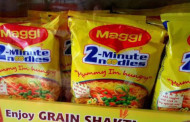
New Delhi: After getting a reprieve from the Bombay High Court on Maggi ban, Nestle India has said it is confident of defending the Rs 640-crore class action suit filed by the government against it before NCDRC.
“… We are confident of defending ourselves when called upon to do so,” a company spokesperson said in an e-mailed response.
He said the company was disappointed with the “unprecedented step of filing of a complaint before the National Consumer Disputes Redressal Commission (NCDRC) against Nestle India”.
When asked if Nestle India plans a counter suit against the government, the spokesperson said: “We will study the issue when we receive the formal details.”
He said based on media reports, the complaint by the government “makes similar allegations which were made to ban the product on June 5, 2015. These issues were awaiting judgement by the Hon’ble Bombay High Court.”
Last week, the Bombay High Court had lifted the ban slapped by food regulators on nine variants of Maggi noodles in India in June while asking Nestle to go in for fresh tests.
On the other hand, the Consumer Affairs Ministry filed a class action suit against Nestle India seeking about Rs 640 crore in damages for alleged unfair trade practices, false labelling and misleading advertisements.
It was for the first time that the ministry dragged a company to the National Consumer Disputes Redressal Commission (NCDRC) using a provision in the nearly three-decade-old Consumer Protection Act.
Reiterating that Nestle India remains committed to working with FSSAI, FDA Maharashtra and other stakeholders, he said: “We hope that this issue will be resolved soon.”
On the company’s preparedness to bring back Maggi in the market, he said: “The process of bringing Maggi noodles back on the shelves is lengthy and complex. It requires alignment with several stakeholders, including our suppliers, distributors and retailers, among others, as well as our continuous engagement with the authorities.”
He further said that the Maggi noodles business, which is an important part of Nestle India “is currently at a standstill”.
“It is Nestle India’s endeavour to get Maggi noodles back on the shelves as soon as possible for the benefit of our consumers,” the spokesperson said.
In June, central food safety regulator FSSAI had banned Maggi noodles, saying it was “unsafe and hazardous” for consumption and the company also withdrew the product from the market.
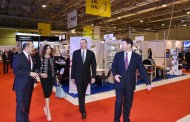
BAKU, Azerbaijan – Azerbaijan’s President Ilham Aliyev opened the 14th International Travel and Tourism Exhibition in Baku on April 3.
The traditional exhibition brought together 371 companies from 42 countries representing proposals for 80 tourism destinations in Azerbaijan on April 2-4.
AITF has recently turned into a main event in Azerbaijan’s fast growing tourism market attracting a large number of international participants and trade visitors from year-to-year. Moreover, AITF is the leading international exhibition in the Caucasian region.
This year, the exhibition presents 17 national groups in attendance from Argentina, Bulgaria, Iran, Georgia, the Dominican Republic, India, Malaysia, Morocco, UAE, Slovenia, Thailand, and Turkey, among other countries. The Maldives makes its debut among the national stands.
Exhibitors include tour operators, national tourism organizations, hotel chains, sanatoriums, health and recreational centers, spa centers, as well as sports and environmental tourism organizations. The potential of the country’s regions Gabala, Gakh, Guba, Ganja, Zagatala, Ismayilli, Lankaran, Masalli, Mingachevir, Nakhchivan Autonomous Republic, Khachmaz, Sheki, as well as other regions attracts many visitors.
Traditionally, the exhibition has a stand for Karabakh, which acquaints guests of the exhibition with the cultural and historical heritage of the region.
The president and his spouse, Mehriban Aliyeva also reviewed two exhibitions held along with AITF: 9th Caucasus international exhibition of equipment and accessories for hotels, restaurants and supermarkets HOREX Caucasus 2015, and 2nd Caspian International Boat and Yacht Show CIBS 2015.
Horex Caucasus 2015 exhibition presents an excellent opportunity for choosing necessary equipment, utensils, food, and drinks from leading international manufacturers and distributors of HoReCa sector for newly built and future facilities. The leading companies from Azerbaijan, Italy, Korea, Lithuania, Russia, and Turkey present their products in the exhibition.
CIBS 2015 exhibition is comprised of the Azerbaijan State Maritime Administration, Arcadia Marine House, the Azerbaijan Sailing Federation, the Baku Marine Service, Regal Boats, and Seagull Caspian, among others.
The exhibition presents powerboat technology products, related products for outdoor activities, as well as the latest technological advances of the industry for professionals, amateurs, and visitors. Participants range from those in Azerbaijan, to Ukraine, and the U.S.
“The AITF exhibition is really leading here, taking into account the number of its participants, as well as the territorial coverage,” Culture and Tourism Minister Abulfas Garayev said at the opening of the exhibition.
“AITF is now not just an exhibition but also a forum. It features tourism potential of different countries of the world as well as hotel equipment and other areas. All this is not accidental as Azerbaijan has already taken a position on the world tourism map,” he said.
The minister noted that beside other countries, the exhibition features expositions from all Azerbaijani regions.
“Azerbaijan has become the center of international events, and that imposes great responsibility upon us for high-quality development of the sector. Azerbaijan has made great moves in the sphere of development of tourism,” Garayev added.
The exhibition is supported by the Azerbaijan Culture and Tourism Ministry, The World Tourism Organisation, Azerbaijan National Confederation of Entrepreneurs Organizations, International Tourism Trade Fair Association.
The event is organized by Iteca Caspian LLC and its partner, the British ITE Group Plc.







Recent Comments