By AI-Powered PMC Akbar Jiwani, Special Correspondent: Real Estate, for Realnewsofindia.com
New Delhi, September 23, 2026 — India’s flagship urban housing programme, the Pradhan Mantri Awas Yojana-Urban 2.0 (PMAY-U 2.0), has crossed a fresh milestone, with the Centre approving a cumulative 18.77 lakh (18,77,000) houses since the scheme’s launch, the Ministry of Housing and Urban Affairs (MoHUA) confirmed this month.
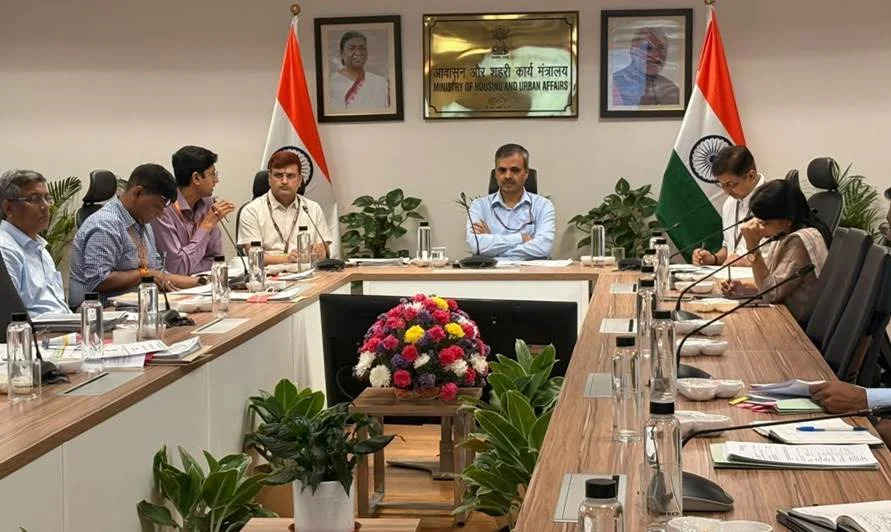
The update came out of the ninth meeting of the Central Sanctioning and Monitoring Committee (CSMC), held in New Delhi and chaired by Satendra Singh, Secretary of the Department of Urban Development, MoHUA. The committee cleared close to 29,000 additional houses at the meeting, spread across six states — Assam, Bihar, Gujarat, Telangana, Tripura and Uttar Pradesh — under the scheme’s Beneficiary-Led Construction (BLC) and Affordable Housing in Partnership (AHP) verticals.
Singh called for “concerted efforts to ensure the timely and effective implementation and monitoring of PMAY-U 2.0, so that the benefits of the scheme reach all eligible beneficiaries,” according to an official readout of the meeting carried by News on AIR.
A SCHEME THAT HAS ACCELERATED THROUGH THE YEAR
The latest tally marks a sharp step-up from where the programme stood barely seven months ago. At the CSMC’s sixth meeting in February 2026, the committee had sanctioned 2.88 lakh (2,87,618) houses in a single sitting, taking the cumulative PMAY-U 2.0 count to 13.61 lakh at the time — spread across 16 states and Union Territories including Uttar Pradesh, Maharashtra, Tamil Nadu, West Bengal, Rajasthan and Gujarat, per a Press Information Bureau release. That approval also included over 12,800 rental-housing units for migrant workers, working women and the urban poor, along with three Demonstration Housing Projects in Chhattisgarh, Puducherry and Rajasthan.
The February data underlined the scheme’s social-inclusion mandate: 96 per cent of PMAY-U 2.0 houses have been allotted in the name of the female head of household or in joint ownership, while 22 per cent went to Scheduled Caste beneficiaries and 5 per cent to Scheduled Tribe beneficiaries. Senior citizens, transgender applicants and persons with disabilities have also been given specific allocation priority under the scheme’s guidelines.
PART OF A LARGER “HOUSING FOR ALL” MISSION
PMAY-U 2.0 builds on the original Pradhan Mantri Awas Yojana-Urban, launched in 2015. Taken together, the Ministry says the two phases of the mission have now sanctioned 122.50 lakh houses nationally, of which more than 97 lakh pucca homes have already been completed and handed over to beneficiaries — one of the largest affordable-housing delivery programmes undertaken anywhere in the world.
The scheme extends support across verticals covering Beneficiary-Led Construction, Affordable Housing in Partnership and Affordable Rental Housing, targeting Economically Weaker Section (EWS), Low Income Group (LIG) and Middle Income Group (MIG) households in urban India.
WHY IT MATTERS FOR THE SECTOR
For India’s real estate industry, the steady expansion of PMAY-U 2.0 sanctions is more than a welfare statistic — it is a demand-side signal. Affordable and mid-income housing remains the volume backbone of the residential market even as developers chase premium and luxury buyers in metro markets, and sustained government sanctioning activity typically feeds directly into construction pipelines for affordable-housing-focused builders, material suppliers and last-mile financing institutions.
With the festive season now underway and developers across the country readying fresh launches, officials indicate the Ministry’s focus in the coming months will shift toward faster on-ground execution — pushing states and Union Territories to speed up approvals, streamline monitoring, and ensure allotted units, particularly those located near mass-transit corridors, are delivered to beneficiaries within committed timelines.