
By AI Powered PMC Akbar Jiwani, Special Correspondent: Real Estate for RealNewsofIndia.com
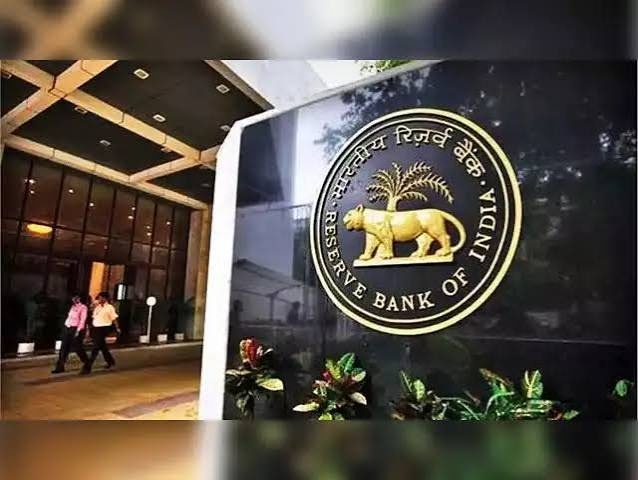
RBI Opens the Lending Tap for REITs: India’s Realty Trusts Cross ₹2 Lakh Crore as New Banking Framework Kicks In From October
Mumbai, August 27, 2026 — India’s Real Estate Investment Trust (REIT) market has quietly crossed a landmark threshold, with the country’s six listed REITs now carrying a combined market capitalisation of roughly ₹2.17 lakh crore and gross assets under management of ₹3.17 lakh crore, spread across more than 214 million square feet of Grade A office and retail space. The milestone arrives just weeks before a new Reserve Bank of India framework — permitting scheduled commercial banks to lend directly to listed REITs and InvITs for the first time — takes effect on October 1, 2026, a move set to reshape how India’s real estate investment trusts raise capital.
A maturing asset class
What began in 2019 with a single office REIT has grown into a six-trust ecosystem: Embassy Office Parks REIT, Mindspace Business Parks REIT, Brookfield India Real Estate Trust, Nexus Select Trust, Knowledge Realty Trust, and the recently listed Bagmane Prime Office REIT. Together they now count more than 4.85 lakh unitholders.
The growth shows up most clearly in payouts. REITs distributed a combined ₹3,136 crore to unitholders in the first quarter of FY27 — nearly double the ₹1,559 crore paid out by four REITs in the same quarter a year earlier — taking cumulative distributions since inception past ₹34,800 crore. For an asset class often pitched to Indian retail investors as a steady, rental-linked alternative to owning physical property, the widening payout base is the clearest signal yet that the model is scaling.
What the RBI has changed
Until now, REITs and InvITs have leaned almost entirely on capital markets and non-bank financiers to fund acquisitions and refinance debt, with commercial banks largely kept at arm’s length. The RBI’s new directions change that, but with guardrails clearly built for a still-maturing sector.
Banks will only be permitted to lend to REITs and InvITs that are SEBI-registered and listed on a recognised stock exchange. At least 80 percent of the underlying assets in a borrowing trust must already be generating positive cash flows for a minimum of one year — for InvITs, the assets must be completed, revenue-generating infrastructure rather than projects under construction. Exposure to any single trust is capped at 49 percent of its gross asset value, or a tighter limit if a bank’s own board chooses. Every loan must be fully secured — through a charge on the underlying property, assignment of rental or toll cash flows, pledge of SPV equity, or escrow arrangements — and structured to repay in line with actual cash flows, with the RBI explicitly ruling out bullet or ballooning repayment structures. Banks may adopt the framework ahead of the October 1 deadline, and existing InvIT loans that don’t yet meet the new conditions can run to maturity but cannot be renewed or enhanced without falling in line.