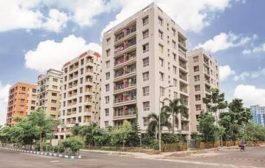
MUMBAI, May 2026 — When names like Adani Properties, Reliance 4IR Realty, Lodha Developers, and JSW Realty converge on the same bidding table, the market pays attention. The Maharashtra Housing and Area Development Authority’s (MHADA) decision to float tenders for three major housing colony clusters — Bandra Reclamation (98.27 acres), SVP Nagar in Andheri West (73.89 acres), and Adarsh Nagar in Worli (34.33 acres) — spanning a combined 206+ acres is not merely a redevelopment exercise. It is, in my professional assessment, a seismic structural shift in how Mumbai’s legacy housing stock will be repositioned in the next decade.
As a Project Management Consultant with over 35 years of active engagement in Mumbai’s redevelopment landscape — and having guided societies through the complex corridors of DCPR 2034, MHADA regulations, SRA frameworks, and cooperative housing law — I want to offer a grounded, practical perspective on what this development truly signals.
The C&DA Model: Why It Matters More Than the Names Bidding
MHADA’s Construction and Development Agency (C&DA) model is architecturally distinct from the conventional developer-driven redevelopment model that most housing societies encounter. Under C&DA:
The developer does not own the land — MHADA retains land title and acts as the sovereign authority.
The developer is appointed as a construction and rehabilitation agency, not a beneficiary.
Rent compensation, corpus fund, and maintenance support are guaranteed during the transit period.
The free-sale component is the developer’s commercial upside — a carefully metered incentive, not a windfall.
This is a critical distinction that residents and cooperative housing societies must understand. The C&DA model is, at its core, a public-private partnership with MHADA holding the moral and legal high ground. The competitive bidding process — with financial capability, past project experience, and eligibility norms as screening criteria — ensures that only technically and financially qualified developers proceed to the financial bid stage. The most competitive proposal wins. This is urban governance working as it should.
Bandra Reclamation: The Prime Piece
At 98.27 acres, the Bandra Reclamation cluster is the crown jewel of this tender tranche. Located in one of Mumbai’s most sought-after micro-markets — sandwiched between the Western Sea Link, Bandra’s commercial district, and proximity to BKC — this land parcel commands extraordinary development potential.
The participation of Lodha, Adani, and JSW in the Bandra bid is unsurprising. Any developer who wins this cluster will effectively rewrite the skyline of Bandra West’s northern coastline. The redevelopment will generate significant free-sale inventory in what is arguably Mumbai’s most globally recognised residential address. Finished product here — post-redevelopment — could command anywhere from ₹35,000 to ₹60,000+ per sq. ft. in premium configurations.
For the existing residents of the Bandra Reclamation colony — many of whom are MHADA allottees living in ageing structures — this represents a once-in-a-generation transformation: from dilapidated decades-old construction to modern, amenity-rich housing with upgraded civic infrastructure.
SVP Nagar, Andheri West: The Infrastructure Play
The Sardar Vallabhbhai Patel Nagar cluster at 73.89 acres in Andheri West sits in the heart of Mumbai’s western suburban business corridor. With proximity to the metro network, JVLR, and the film and media industry ecosystem, SVP Nagar’s redevelopment carries a different value proposition — transit-oriented, mixed-use densification.
Reliance 4IR Realty’s bid here is strategically coherent. As a developer with a clear mandate around technology-integrated real estate, their participation signals that this cluster may see smart infrastructure, green building compliance, and digitally managed residential ecosystems. Adani and Hanura Realty’s presence adds competitive depth.
The SVP Nagar redevelopment, when completed, will substantially increase the formal housing supply in a corridor that is currently under intense pressure from RERA-registered projects. This has macro-implications for rental yields, resale values, and the absorption of mid-income housing demand in the western suburbs.
Adarsh Nagar, Worli: The Prestige Address
At 34.33 acres in Worli — the epicentre of Mumbai’s luxury residential market — the Adarsh Nagar project is the smallest in area but arguably the most consequential in terms of per-acre value creation. Worli’s proximity to the Bandra-Worli Sea Link, the upcoming Coastal Road, and its adjacency to South Mumbai’s premium catchment makes this a high-stakes redevelopment.
Adani, Lodha, and JSW bidding for this cluster is textbook strategic positioning. The winner here gains not just construction rights but brand equity in one of India’s most photographed skylines.
Far-Reaching Effects on Real Estate Development: My Assessment
Having worked extensively on feasibility modelling, PMC appointments, and society-side advisory across Mumbai’s redevelopment spectrum, here is what I believe the 206-acre MHADA tender truly unlocks:
1. Benchmarking Developer Accountability
The C&DA tender process creates a transparent, documented record of developer capability and commitment. When large-format corporate developers submit to MHADA’s scrutiny — financial capability, past project performance, eligibility norms — it raises the bar for all redevelopment in Mumbai. Smaller societies negotiating with mid-tier developers can now cite MHADA’s due diligence standards as a reference benchmark.
2. Supply Pipeline for Mid-Income and Affordable Segments
MHADA’s mandate includes ensuring that existing residents receive safe, modern, spacious homes. The rehabilitation component of these three clusters will inject thousands of upgraded dwelling units into Mumbai’s housing stock. This is not luxury supply — it is structured, rehabilitated, middle-income housing with corpus support and maintenance guarantees. For a city chronically short of quality mid-income inventory, this matters enormously.
3. FSI Utilisation and Urban Form
Projects of this scale under DCPR 2034 will utilise significant FSI, TDR, and fungible FSI components. The free-sale component across 206 acres will generate substantial new inventory, applying moderate price correction pressure in these micro-markets as supply increases. Developers who have held surrounding land or inventory should factor this into their pricing and absorption timelines.
4. Template for Future MHADA Cluster Tenders
MHADA currently manages 11 C&DA projects spanning approximately 925 acres across Mumbai. The success or failure of this three-cluster tender will directly influence how MHADA — and by extension, the state government — approaches the remaining legacy housing stock. A well-executed outcome here could accelerate the next tranche of cluster tenders, potentially unlocking hundreds of additional acres for structured urban renewal.
5. Confidence Signal for Housing Society Redevelopment
For the thousands of cooperative housing societies across Mumbai contemplating self-redevelopment or JV redevelopment, MHADA’s active role as a land-owning, quality-assuring authority in large-format projects sends a powerful signal: organised, regulated, publicly accountable redevelopment is viable and scalable. This should embolden society members who have been paralysed by fear of exploitation, delays, or developer default.
A Word of Caution: Governance Must Match Ambition
I would be remiss as a PMC if I did not flag the challenges that projects of this scale invariably encounter:
Transit period management across hundreds of displaced families is a logistical and administrative challenge that will test MHADA’s institutional bandwidth.
Legal encumbrances, occupancy disputes, and legacy title issues within these colonies must be resolved proactively — not reactively.
Elected Managing Committee alignment within the colonies is essential before any binding redevelopment commitments are executed. Governance vacuums are the single largest source of redevelopment delays and disputes in Maharashtra.
Construction timeline discipline must be enforced through milestone-linked payment structures and robust PMC oversight — a lesson that hundreds of SRA and MHADA projects have learned the hard way.
Conclusion: Mumbai Is Redeveloping Itself — Strategically
The entry of India’s largest real estate and infrastructure conglomerates into a publicly tendered MHADA cluster redevelopment process is a watershed moment. It signals institutional confidence in Mumbai’s urban renewal framework, validates the C&DA model as commercially viable for marquee developers, and sets in motion a supply-side transformation that will reshape three of the city’s most strategically located micro-markets.
For residents, it promises dignity, modernity, and security. For investors, it signals value creation at scale. For the broader real estate ecosystem, it is a masterclass in how organised, policy-backed, competitively tendered urban renewal can deliver outcomes that neither pure developer-driven nor pure government-executed models can achieve alone.
Mumbai is not just redeveloping its buildings. It is redeveloping its relationship with its own urban future.
Akbar Jiwani is the Founder and Principal Consultant of Universal Buildtech Development, an MSME Ministry Certified Project Management Consultant (PMC), Government of India, based at Bandstand, Bandra West, Mumbai. He specialises in cooperative housing society redevelopment, DCPR 2034 compliance, feasibility advisory, and project finance under MHADA, SRA, and self-redevelopment frameworks.
Views expressed are professional opinions based on 35+ years of active engagement in Mumbai’s real estate and redevelopment sector.
© RealNewsOfIndia.com | Powered by AI-Driven Real Estate Intelligence