


Mumbai | April 15, 2026 | Real News of India
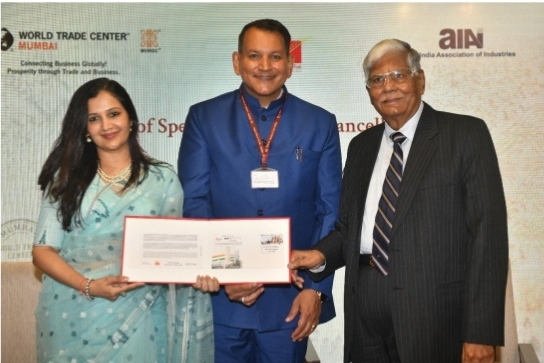
In a significant recognition of India’s growing global trade presence, India Post has released a Commemorative Special Postal Cover honoring the remarkable contribution of World Trade Center Mumbai (WTC Mumbai). This prestigious acknowledgment marks over five decades of the institution’s pivotal role in strengthening India’s trade and industry ecosystem.
The special event, organized in Mumbai, celebrated WTC Mumbai’s long-standing legacy in connecting Indian businesses to international markets and promoting economic partnerships across the globe. The initiative reflects the institution’s continued commitment to advancing India’s position as a global trade hub.
A Legacy Rooted in Vision and Nation-Building
Speaking on the occasion, Chairman Dr. Vijay Kalantri highlighted the visionary foundation of WTC Mumbai, inspired by M. Visvesvaraya, who believed in nation-building through innovation, planning, and enterprise.
He also recalled the historic role of Morarji Desai, under whose leadership the land for the center was allotted and later inaugurated, marking a milestone in India’s trade infrastructure development.
“WTC Mumbai has continuously adapted to changing global dynamics while supporting MSMEs and contributing to India’s economic growth,” Dr. Kalantri stated.
India Post’s Expanding Role in Trade Facilitation
Chief Postmaster General, Maharashtra Circle, Amitabh Singh, emphasized the importance of institutions like WTC Mumbai in fostering trade collaborations. He also highlighted the evolving role of India Post as a logistics powerhouse, supporting commerce through expanding infrastructure and strategic partnerships.
Symbol of National Recognition
The release of the Special Postal Cover serves as a historic symbol, documenting WTC Mumbai’s contribution to India’s trade and industrial development. Such commemorative covers are issued by India Post to mark significant milestones and achievements of national importance.
Director of Trade & Investment Promotion, Priya Pansare, expressed gratitude to the Department of Posts and reiterated WTC Mumbai’s commitment to sustainability, innovation, and global collaboration.
Looking Ahead
As WTC Mumbai moves forward, it aims to strengthen its mission of inclusive growth, global connectivity, and economic progress. With a strong legacy and forward-looking vision, the institution continues to play a crucial role in shaping India’s future in global trade.

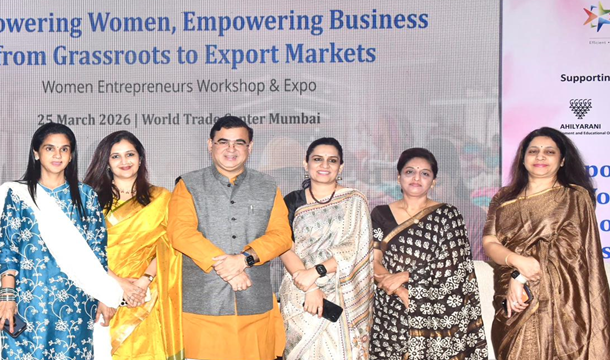
In the Picture (L to R): Ms. Sangeeta Jain, Senior Director, All India Association of Industries; Ms. Priya Pansare, Director, Trade and Investment Promotion, WTC Mumbai; Shri Jaykumar Rawal, Minister of Marketing and Protocol, Maharashtra State; Smt. Nidhi Choudhary (IAS), Director – National Gallery of Modern Art, Ministry of Culture, Government of India; Dr. Megha Phansalkar, Founder of Tisser Artisan Trust; Smt. Shwetali Thakare, Chairperson, Maharashtra Water Resources Regulatory Authority, Government of Maharashtra at the event.
Mumbai, 25 March 2026: In a significant initiative to strengthen women-led enterprises and integrate them into global trade ecosystems, World Trade Center Mumbai, in association with the All India Association of Industries (AIAI) and the Government e-Marketplace (GeM), hosted a high-impact event titled “Empowering Women, Empowering Business – From Grassroots to Export Markets.” The event brought together senior government officials, industry leaders, women entrepreneurs and MSME’s on a common platform to address the critical gap in the country’s growth story enabling women-led businesses to scale beyond local markets and participate meaningfully in global trade.
In his address, Shri Jaykumar Rawal, Minister of Marketing and Protocol, Maharashtra State, said “from MSMEs to large-scale industries, Maharashtra has made a significant contribution to the nation’s economy. Women are increasingly becoming a driving force across manufacturing, services, and agriculture, thereby promoting inclusive development.”
“Under the leadership of Hon’ Chief Minister Shri Devendra Fadnavis ji, the Government of Maharashtra is fully committed to strengthening women entrepreneurship. We are focused on improving market linkages, expanding digital access, enhancing financial inclusion, and building skills that enable women to scale their enterprises.” said Shri Rawal.
Shri Rawal added “Initiatives such as Umed Malls under the Maharashtra State Rural Livelihood Mission are creating permanent, district-level retail ecosystems that provide assured, year-round market access for women Self-Help Groups. By eliminating intermediaries, these platforms empower women directly ensuring no middlemen, no barriers, only opportunity. Our vision is to build a strong enabling ecosystem where women entrepreneurs can confidently participate, compete, and lead in both domestic and global markets.”
Dr. Vijay Kalantri, Chairman, World Trade Center Mumbai and President, All India Association of Industries, said “It is truly encouraging to see how women are becoming an integral part of India’s growth story. Today, female labour force participation has crossed 42%, nearly doubling over the past six years, while literacy among women has risen from about 53% in the early 2000s to over 75% today. With more than 20% of MSMEs now led by women, their contribution is both visible and impactful. As we move towards the vision of Viksit Bharat, women will undoubtedly be at the heart of this transformation.”
“The future of India’s economic growth is closely linked to the empowerment of women entrepreneurs. The presence of over 150 women here reflects their strong commitment not only to manufacturing, but also to go global. By connecting grassroots enterprises with global opportunities, we are fostering inclusive growth while strengthening India’s position in international trade,” added Dr. Kalantri.
Shri Satya Narayan Meena, Additional CEO, Government e Marketplace (GeM), “GeM has brought transparency, efficiency, and inclusivity to public procurement, enabling over 2 lakh women-led enterprises to directly access government buyers and scale their businesses nationwide. With procurement exceeding ₹5.4 lakh crore last year, GeM is not just a digital platform, but a powerful engine driving growth, opportunity, and national recognition for MSMEs and women-led enterprises.” He added that through technological advancements and a transparent marketplace, GeM is strengthening India’s public procurement ecosystem and contributing to the nation’s economic progress.
Smt. Nidhi Choudhary (IAS), Director – National Gallery of Modern Art, Ministry of Culture, Government of India, said “The numbers clearly reflect the growing strength of women in India’s entrepreneurial ecosystem. Over 2 crore MSMEs are owned by women, contributing nearly 21% of the sector, and more than 45% of startups today have at least one-woman director. Initiatives such as PMEGP, CMEGP, Mudra Yojana, and the Women Entrepreneurship Platform by NITI Aayog are playing a vital role in supporting this growth.
In Maharashtra, the State Innovation Mission’s dedicated women’s wing is also further empowering women to scale their ventures. When women-led enterprises grow, the impact goes far beyond economics; it drives meaningful social change.” added Ms. Nidhi.
Smt. Shwetali Thakare, Chairperson, Maharashtra Water Resources Regulatory Authority, Government of Maharashtra said, “India represents nearly 18% of the world’s population and today stands around a $4 trillion economy. Even amid global uncertainties, India continues to be one of the fastest-growing economies. In this journey, it is essential that women have equal access to opportunities, resources, and platforms to grow because when women progress, the nation leads with purpose.”
Ms. Wang Awei, Deputy Consul General of the People’s Republic of China, highlighted the growing role of women in global economic development and said “Technology is profoundly transforming the world, and e-commerce has opened new opportunities for women to grow and scale their businesses. With greater collaboration and shared learning, there is immense scope to further empower women entrepreneurs globally.”
Dr. Megha Phansalkar, Founder of Tisser Artisan Trust, emphasized that the challenge lies not in empowerment, but in access. “Our vision is not just to break barriers ourselves, but to enable thousands of women to rise alongside us. The real issue lies in access to markets, opportunities, and platforms. Once these barriers are overcome, it will unlock immense progress for the nation,” she remarked.
Ms. Priya Pansare, Director, Trade & Investment Promotion, WTC Mumbai, said, “Enabling women entrepreneurs to access global markets is critical for India’s growth. This requires structured support through policy, capacity building, and stronger international linkages. Empowering women-led enterprises will not only drive inclusive development but also contribute significantly to sustainable economic growth,”
Ms. Sangeeta Jain, Senior Director, All India Association of Industries, said “Women are playing an increasingly important role in shaping India’s economic progress. Strengthening their participation requires greater focus on digital platforms, financial inclusion, and skill development to help women-led enterprises scale effectively. Enhancing women’s participation is essential to accelerating the nation’s growth trajectory.
The program also saw participation from representatives of the Ahilyarani Women’s Development and Educational Organization. The event reinforced the need to move beyond participation towards global competitiveness, and highlighted how aligning government initiatives, institutional support, and international partnerships can help build a robust ecosystem where women entrepreneurs successfully transition from grassroots enterprises to global exporters.

MUMBAI: (Mar 4) The Maharashtra government is striving to promote bamboo cultivation across the state, highlighting its potential to generate rural employment, preserve traditional artisan skills, and reduce reliance on plastic, Forest Minister Ganesh Naik said on Wednesday.
The minister said government procurement rates for bamboo products will be considered to stabilise markets and encourage production.
Replying during a discussion in the legislative assembly, Naik said bamboo can now be cultivated in Konkan, Western Maharashtra, Vidarbha, Marathwada and Khandesh in the north-western part of the state
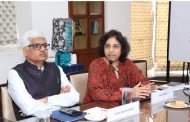
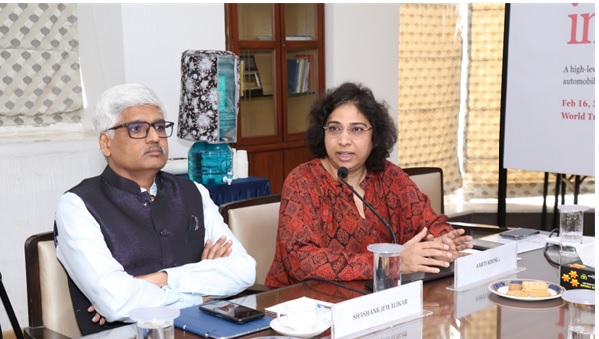
Mumbai, 16 February 2026: World Trade Center Mumbai, in association with Climate Trends, hosted a high-level roundtable on “Urban Heat Stress and Its Growing Impact on India’s Economic Sectors and Public Health” as part of Mumbai Climate Week. The discussion highlighted how rising temperatures and frequent heatwaves are increasingly affecting productivity, worker safety, electricity demand, and supply-chain efficiency across Indian cities.
Addressing the session, Vijay Kalantri, Chairman of World Trade Center Mumbai and President of the All India Association of Industries, stated that urban heat is no longer just an environmental issue but a serious development challenge. He noted that many Indian cities are already experiencing temperatures 3–8°C higher than surrounding rural areas due to the Urban Heat Island effect. With India’s urban population projected to cross 40% by 2030, rising temperatures are expected to significantly impact public health, urban liveability, and economic productivity, particularly among vulnerable communities. He also highlighted that India could lose around 5.8% of total working hours by 2030 due to extreme heat, while the World Bank has warned of potential GDP losses of up to 4.5% without adequate adaptation measures.
Aarti Khosla, Founder and Director of Climate Trends, emphasized that climate action lies at the intersection of public health and economic growth. She noted that investing in resilience is economically beneficial, as every dollar invested in climate resilience can generate significantly higher savings by preventing future losses. She also stressed the need for practical financial models that support MSMEs and protect vulnerable workers, especially those in India’s large informal workforce.
Vishwas Chitale, Head of Climate Resilience at the Council on Energy, Environment and Water (CEEW), highlighted that rapid urbanisation is contributing as much to rising urban heat as climate change itself. He stated that higher temperatures and humidity levels are already affecting productivity and industrial output, making climate-resilient adaptation measures both an environmental necessity and a sound economic investment.
The roundtable brought together representatives from industry, finance, healthcare, sustainability, and policy institutions, who agreed that urban heat is emerging as a major economic and development challenge requiring coordinated planning, integrated policy frameworks, and actionable resilience strategies for Indian cities.
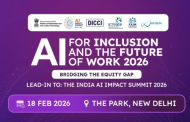
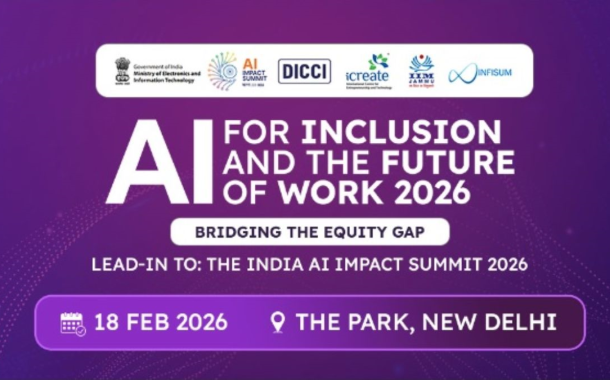
New Delhi [India], February 13: The Dalit Indian Chamber of Commerce and Industry (DICCI) will convene the International Conclave on AI for Inclusion and the Future of Work 2026: Bridging the Equity Gap on 18th February 2026 at The Park, New Delhi. The conclave is being organised in partnership with iCreate, Indian Institute of Management Jammu, Infisum and the Entrepreneurship Development Institute of India (EDII), and will serve as a precursor to the India AI Impact Summit 2026.
Supported by the Ministry of Electronics and Information Technology, Government of India, the conclave will bring together senior representatives from the Union and State Governments, global policymakers, industry leaders, economists, academic experts and social sector practitioners. Discussions will focus on aligning artificial intelligence with the goals of equity, livelihood security and inclusive economic growth.
As AI rapidly reshapes productivity, service delivery and business models, the conclave will examine emerging risks around concentration of capital, compute infrastructure and intellectual property, and their potential to deepen structural inequalities. Deliberations will explore policy and market interventions required to ensure equitable access to AI through infrastructure development, responsible data governance and inclusive skilling frameworks.
Key agenda areas include AI inequality in global development, governance frameworks for responsible AI deployment, formalisation pathways for MSMEs and informal workers, and the role of digital public infrastructure in expanding access to AI systems. Special emphasis will be placed on enabling participation of Scheduled Castes, Scheduled Tribes, women entrepreneurs, gig workers, sanitation workers, artisans and first-generation business owners in emerging AI value chains.
A key outcome of the conclave will be the Delhi Declaration on Inclusive AI and the Future of Work, which is expected to outline national principles for equity-by-design, worker transition frameworks, portable social protection mechanisms, multilingual AI skilling pathways, inclusive data governance standards and strengthened Centre–State coordination. The Declaration will inform deliberations at the India AI Impact Summit 2026.
Dr. Milind Kamble, Founder Chairman, DICCI & Conclave Chairman, Conclave on AI for Inclusion and the Future of Work stated, “Artificial intelligence will define the next phase of economic expansion. The central question is whether this growth will remain concentrated or become participatory. This conclave is anchored in six pillars — education, small business formalisation, financial literacy, future-ready agriculture, AI for speedy justice, and AI for empowering informal workers. Inclusion must be embedded at the design stage of AI systems and governance frameworks to ensure durable social mobility.”
Padma Shri awardee Mr. Ravi Kumar Narra, National President, DICCI, added, “Economic empowerment delivers impact when policy intent is matched with institutional execution. AI must be deployed with similar discipline to enhance productivity in the informal economy, expand market access for small enterprises and enable credible worker transition pathways. Inclusion must be measurable, not aspirational.”
Through this conclave, DICCI aims to institutionalise inclusion as a foundational principle within India’s evolving AI policy ecosystem, advancing structured dialogue and actionable commitments that align artificial intelligence with equity, employment and national development priorities.

New Delhi [India], February 14: Infiheal, an IIT Bombay mental health startup, has launched DuoChat, described as the world’s first AI relationship coach designed to help two people communicate together in real time and build stronger relationships.
The product was introduced at the official pre-summit hosted by Infiheal and IGAP leading up to the India AI Summit 2026 in New Delhi, where senior leaders from major technology firms, public policy institutions, healthcare systems, international organizations, academic research centers, and regulatory authorities gathered to shape the future of responsible artificial intelligence.
DuoChat’s release comes just ahead of Valentine’s Day, a time when conversations around love, compatibility, emotional connection, and relationship health naturally take center stage. While the season often focuses on celebration, mental health experts note that it also highlights communication gaps and unresolved tensions in partnerships — making early-stage support tools particularly relevant.
Over the past decade, digital mental health tools have largely focused on individuals — offering support for anxiety management, emotional regulation, and personal resilience. However, research increasingly underscores that emotional well-being is deeply relational.
A 2023 survey by the American Psychological Association found that nearly 60 percent of adults reported significant stress linked to friendships, family dynamics, or workplace communication — stressors that directly affect relationship quality.
Despite this awareness, relationship support often remains reactive. Couples therapy is frequently sought only during crises, and access barriers — including cost, stigma, and long waitlists — can delay intervention. Many individuals attempt to resolve conflict independently, without a shared framework for constructive dialogue.
Building a Shared AI-Facilitated Space
Infiheal previously launched Healo, an AI mental health companion offering guided emotional support and therapist matching. Within just over a year, Healo grew to more than one million users, with 91 percent reporting improvement in how they felt after using the platform.
During that expansion, the team observed a consistent pattern: a majority of user conversations centered on relationships — romantic, familial, and social. Users frequently uploaded screenshots of difficult exchanges, asking the AI to interpret tone and intent. While this offered individual clarity, it did not address the relational dynamic itself.
DuoChat was built to bridge that gap.
The platform creates a private, confidential chat environment where two participants engage simultaneously. The AI functions as a facilitator — not a replacement for communication. It introduces structured prompts, reflection cues, and perspective-building interventions designed to reduce defensiveness, prevent escalation, and clarify misinterpretations. Drawing from established relationship science and evidence-based therapeutic frameworks, the system intervenes selectively — primarily when conversations become heated or when guided reflection may restore empathy and understanding.
Early-Stage, Preventative Support
Globally, demand for counseling continues to outpace supply, leaving many couples and families waiting weeks or months for professional support. During these gaps, emotional distance can deepen.
DuoChat positions itself as early-stage support — not therapy, but a preventative tool aimed at encouraging healthier dialogue before disconnection becomes entrenched.
“We’ve built AI platforms to optimize productivity, entertainment, and even shopping. But we haven’t focused enough on leveraging AI to help people understand each other,” said Srishti Srivastava, Founder and CEO of Infiheal. “DuoChat is our attempt to shift AI toward strengthening human relationships, not replacing them.”
India-Led Innovation in Mental Health AI
Founded by Srishti Srivastava and Utkarsh Srivastava, Infiheal develops clinically validated AI models for mental healthcare within responsible AI frameworks, emphasizing safety and trust. The company has been recognized by Narendra Modi, in Mann Ki Baat and has showcased its work at global platforms such as the World Economic Forum in Davos.
With DuoChat launching around Valentine’s Day, the startup expands its mission to make mental health support accessible, affordable, and stigma-free — while reframing AI not just as a tool for individual optimization, but as a bridge for stronger human connection.

THANE: (Feb 8) At least seven godowns stocked with materials like paper products and plastic items were destroyed after a fire broke out in an industrial hub in Maharashtra’s Thane district on Sunday, an official said.
No one was injured in the incident at the godown complex in Bhiwandi’s Mankoli area, said Chief Fire Officer Nitin Lad from the Bhiwandi-Nizampur Municipal Corporation.
After being alerted about the fire, which started around 2.30 pm, three fire engines were rushed to the spot, he said.
Mumbai, February 7, 2026:
India and the United States have taken a major step forward in strengthening their strategic and economic partnership with the signing of an Interim Trade Pact, setting the stage for an ambitious $500 billion bilateral trade target in the coming years.
The agreement, signed within days of its announcement, underscores the seriousness both nations attach to expanding trade ties. The interim pact significantly reduces import duties from as high as 50% to zero on several key Indian export sectors, including gems and jewellery, pharmaceuticals, agricultural products, smartphones, and auto components.
Welcoming the announcement, Dr. Vijay Kalantri, Chairman of World Trade Center Mumbai and President of the All India Association of Industries (AIAI), described the deal as a “transformational moment” for India’s global trade positioning.
“With today’s joint statement, it is amply clear that this trade deal will support India’s long-term vision of Viksit Bharat, strengthening our role in international trade while cementing our geopolitical and geoeconomic partnership with the United States,” Dr. Kalantri said.
The broader contours of the agreement were outlined in a joint statement by both countries, followed by a press conference addressed by Union Commerce Minister Piyush Goyal, who indicated that the final Bilateral Trade Agreement (BTA) is expected to be completed by March 2026.
According to trade experts, the immediate reduction in tariffs gives Indian exporters a significant competitive advantage over other global players, particularly benefiting MSMEs, job creation, and export-led growth.
Dr. Kalantri further highlighted that unlike several other trade agreements signed with regions such as the EU, UK, and New Zealand—whose benefits will materialize gradually—the India–US interim pact delivers immediate economic impact.
“The provisions on technology transfer and investment cooperation will boost India’s startup ecosystem, innovation capacity, and access to critical ICT products. This will not only accelerate economic growth but also strengthen national security,” he added.
Importantly, the pact reassures domestic stakeholders that India has not compromised on sensitive and strategic sectors, addressing political and economic concerns while ensuring broad acceptability of the agreement.
Trade analysts view the interim pact as a strong foundation for a comprehensive long-term trade framework, positioning India and the US as key economic partners in an increasingly competitive global landscape.

By Wellett Potter, University of New England
LONDON: (Feb 4) Would you create an interactive “digital twin” of yourself that can communicate with loved ones after your death?
Generative artificial intelligence (AI) has made it possible to seemingly resurrect the dead. So-called griefbots or deathbots – an AI-generated voice, video avatar or text-based chatbot trained on the data of a deceased person – proliferate in the booming digital afterlife industry, also known as grief tech.
Deathbots are usually created by the bereaved, often as part of the grieving process. But there are also services that allow you to create a digital twin of yourself while you’re still alive. So why not create one for when you’re gone?
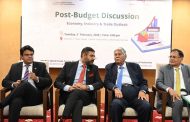
Mumbai | 3 February 2026
By: Real News of India
World Trade Center Mumbai, in association with the All India Association of Industries (AIAI), organised a Post-Budget Discussion Session to deliberate on the implications of the Union Budget 2026–27 for MSMEs, trade, industry, exports, and India’s long-term economic growth trajectory. The event brought together industry leaders, exporters, professionals, policy observers, and diplomats to analyse key budget announcements and their impact on the economy.
Speaking at the session, Mr. Siddhartha Rastogi, Principal Officer, Managing Director & Chief Operating Officer, Ambit Asset Management, stated that the Union Budget lays a clear roadmap for the coming years. Emphasising inclusive growth, he said that achieving a GDP growth rate of 7.2 percent requires strengthening India’s 6 crore MSMEs, which form the backbone of the economy. He highlighted that linking government spending with the TReDS platform would unlock liquidity and enhance order books for MSMEs, while promotion of digital payments and securitisation would improve credit flow and prevent capital from being stuck in the system.
Mr. Rastogi also welcomed the government’s focus on critical minerals and rare earth elements, noting that such initiatives would ensure stable supply chains, strengthen Atmanirbharta, and safeguard the economy from geopolitical risks.
Explaining indirect tax-related changes, Mr. Pranav Prakash Mehta, Partner, KJM INC and Specialist in Indirect Taxation, said that while the Budget did not introduce major taxation reforms, minor amendments would significantly improve ease of doing business. He noted that changes related to post-supply discounts would increase supplier accountability and ultimately benefit customers. He further added that clarifications on supply invoicing and invoice discounting would reduce litigation and speed up resolution of long-pending tax matters.
Sharing insights on direct taxation proposals, Mr. Arun Kumar Garodia, Former ITAT Member and Income Tax Consultant, said that the tax holiday announced for data centres would attract capital flows into new-age technology investments and strengthen India’s long-term investment climate. He added that changes in the taxation of share buybacks—now to be taxed under capital gains—would benefit both industry and shareholders. Reforms in Minimum Alternate Tax (MAT) and the decriminalisation of certain tax defaults, he said, reflect the government’s trust in the business community and promote a more collaborative growth environment.
Addressing the gathering, Dr. Vijay Kalantri, Chairman, World Trade Center Mumbai and President, All India Association of Industries, stated that the Budget provides a strong roadmap for achieving Viksit Bharat by 2047. He said that incentives for data centres, focused support for technology-driven industries, and policy clarity would help India move towards a USD 10 trillion economy by 2030. He also emphasised that simplification of taxes and resolution of legacy issues would significantly enhance ease of doing business in the country.
The annual Post-Budget Discussion at World Trade Center Mumbai witnessed participation from over 150 business leaders, MSMEs, innovators, and diplomats from several countries. The session concluded with Capt. Somesh Batra, Vice Chairman, World Trade Center Mumbai, delivering the vote of thanks.



















Recent Comments