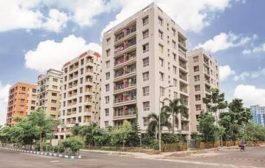
Mumbai’s decades-old struggle to replace its crumbling, cramped public housing stock has reached a legal and policy turning point. The Bombay High Court has upheld the Maharashtra government’s cluster redevelopment policy for Maharashtra Housing and Area Development Authority (MHADA) layouts, dismissing a batch of petitions filed by housing societies at Adarsh Nagar in Worli and the Bandra Reclamation colony that sought to pursue independent redevelopment instead of joining the state’s integrated scheme. The ruling is being read across the industry as the first serious judicial endorsement of the state’s push to redevelop entire MHADA colonies as single, planned townships rather than as a patchwork of individual society projects.
The judgment lands at a moment when Mumbai’s redevelopment pipeline is already accelerating. Industry trackers estimate that the city’s redevelopment activity could unlock close to 59,000 new homes worth roughly ₹1.5 trillion by 2031, with 1,094 housing societies currently under some stage of redevelopment across nearly 432 acres of land, and developer agreements crossing the 1,050 mark for the first time since 2020.
Background
MHADA was created to provide affordable housing to Mumbai’s middle and working classes, and many of its colonies — built through the 1950s, 1960s and 1970s — are now well past their structural lifespan. For years, redevelopment of these colonies proceeded building by building or society by society, a slow and fragmented process that often left surrounding infrastructure, roads, drainage and open spaces untouched even as individual blocks were rebuilt.
To address this, the Maharashtra State Cabinet, led by Chief Minister Devendra Fadnavis, approved a policy — through Government Resolutions issued in April and December 2025 — enabling integrated, cluster-based redevelopment of MHADA layouts spanning 20 acres or more in Mumbai and its suburbs. Under the policy, 114 MHADA layouts under the Mumbai Board’s jurisdiction have been identified for redevelopment as unified projects, to be executed by a single private developer selected through tendering, rather than through multiple independent redevelopment initiatives running in parallel. A distinctive feature of the policy is that it does not require individual consent from every resident; instead, developers appointed through the tender process must secure a resolution of consent from the concerned housing societies as a body. An empowered committee, chaired by the Additional Chief Secretary of the Housing Department, has been constituted to oversee implementation.
Current Developments
The policy’s first real test came from residents of two of MHADA’s largest Mumbai layouts: Adarsh Nagar in Worli, spanning about 34.33 acres, and the Bandra Reclamation colony, spanning roughly 98.27 acres. Several housing societies in these layouts moved the Bombay High Court, arguing that they were being compelled into a cluster scheme despite preferring to redevelop independently through their own developers.
In its ruling, the Bombay High Court dismissed the petitions, holding that the larger public interest in planned urban development outweighs individual societies’ preference for separate redevelopment. The bench observed that an integrated approach allows for proper planning of shared infrastructure — internal roads, open spaces, parking, drainage and water supply — across an entire layout, rather than piecemeal upgrades that leave civic infrastructure disjointed. Following the judgment, the state informed the court that no work order would be issued for four weeks, giving the affected societies a window to appeal to the Supreme Court if they choose to.
Detailed Analysis
The ruling is significant for reasons that go beyond the two layouts named in the case. It effectively tests the constitutional and policy soundness of removing individual consent as a precondition for redevelopment — a marked departure from the consent thresholds long embedded in cooperative housing society redevelopment, self-redevelopment and even SRA frameworks, where resident or member consent percentages are typically central to how a project proceeds.
By upholding the cluster model, the court has implicitly endorsed the state’s view that MHADA colonies, many of which sit on prime, large contiguous land parcels in locations like Bandra and Worli, are better redeveloped as single master-planned townships than as a series of disconnected towers. This dovetails with the broader direction set by DCPR 2034 and the Self-Redevelopment Policy, both of which have already been nudging Mumbai’s redevelopment market toward larger land parcels — data for 2026 shows land parcels above 10,000 square metres now account for more than half of all redevelopment area in the city, a notable shift from the smaller, single-building projects that dominated a decade ago.
For developers, the judgment reduces one major source of execution risk: the possibility of hold-out societies stalling a project indefinitely. For residents, it raises a genuine trade-off between the promise of better-planned, amenity-rich townships and the loss of the ability to choose their own developer or negotiate independently.
Benefits
Proponents of the cluster model point to several advantages. Redeveloping an entire 20-acre-plus layout in one go allows for coherent planning of roads, drainage, water and sewage networks, rather than repeated retrofitting as each building is redone separately. Residents are expected to receive larger carpet areas than under typical one-to-one redevelopment ratios, along with modern amenities such as lifts, dedicated parking, gardens, gyms, community halls, CCTV surveillance and, in some layouts, schools and healthcare facilities. Because the state facilitates land assembly and tendering, project timelines for the layout as a whole can, in theory, be more predictable than a scenario where dozens of individual societies negotiate separately with different developers over many years. The policy also opens the door to genuinely mixed-use townships, with green zones, civic amenities and commercial space integrated into the master plan rather than added as an afterthought.
Challenges
The dismissed petitions themselves capture the central challenge: some residents feel the removal of an individual consent requirement erodes a safeguard that cooperative housing law has traditionally provided, even if a society-level resolution of consent is still required. Cluster and integrated projects, almost by definition, take longer to reach completion than a single building redevelopment, since design, approvals and construction must be sequenced across a much larger footprint — residents may face extended timelines in transit housing or rental accommodation. There are also execution risks inherent to any large-scale public housing redevelopment: the capacity of the selected developer to fund and deliver a project of this scale, the pace of the empowered committee’s oversight, and the possibility of further litigation, including a Supreme Court appeal, all remain open questions. Smaller societies within a cluster may also feel their specific concerns get diluted within a layout-wide plan governed by a single developer and tender process.
Expert Opinion
Urban planners and real estate consultants tracking the case broadly view the ruling as consistent with the direction Mumbai’s redevelopment ecosystem has been moving in since DCPR 2034 — toward larger, better-integrated projects rather than isolated towers shoehorned into old plot boundaries. At the same time, several practitioners caution that the real test of the policy will not be the legal outcome but the execution: whether the empowered committee can move tenders and approvals fast enough, and whether developers selected for 20-acre-plus layouts have the balance-sheet strength and experience to deliver townships of this scale without the delays that have historically plagued large redevelopment projects in the city.
Future Outlook
With the Bombay High Court’s endorsement now in place — subject to any Supreme Court appeal within the four-week window — the state is likely to move more of its 114 identified MHADA layouts toward tendering over the coming months. If executed well, this could meaningfully accelerate the broader Mumbai Metropolitan Region redevelopment story, adding to the roughly 59,000 homes and ₹1.5 trillion in value already projected from the city’s redevelopment pipeline by 2031. It may also encourage the state to extend similar integrated, cluster-based thinking to other ageing public housing stock beyond MHADA’s Mumbai Board layouts, and to cooperative housing societies considering cluster redevelopment under DCPR 33(9) more broadly.
Practical Takeaways
Housing society members living in MHADA layouts above 20 acres should watch for empowered-committee notifications and tender announcements affecting their specific colony, since project terms will now be set at the layout level rather than negotiated independently. Developers evaluating these opportunities should factor in the four-week appeal window and the possibility of further litigation before committing significant capital. Legal and compliance teams advising cooperative societies should study the judgment closely, as its reasoning on consent thresholds could influence how similar disputes are argued in other large-scale redevelopment and cluster schemes across the state.
Conclusion
The Bombay High Court’s decision to uphold Maharashtra’s MHADA cluster redevelopment policy marks a meaningful milestone in the state’s long effort to modernise its ageing public housing stock through planned, large-scale redevelopment rather than fragmented, building-by-building projects. Whether this translates into faster, better-delivered townships at Adarsh Nagar, Bandra Reclamation and MHADA’s other 114 identified layouts will depend on execution — but the legal groundwork for the state’s preferred model of redevelopment now looks considerably firmer.
Key Takeaways
The Bombay High Court has upheld Maharashtra’s cluster redevelopment policy for MHADA layouts of 20 acres or more, dismissing petitions from Adarsh Nagar (Worli) and Bandra Reclamation societies that wanted independent redevelopment. The policy, approved via Cabinet GRs in April and December 2025, covers 114 identified MHADA layouts in Mumbai and removes the requirement for individual resident consent, though society-level consent resolutions are still required. The state has agreed to withhold work orders for four weeks to allow an appeal to the Supreme Court. The ruling reinforces a broader shift in Mumbai’s redevelopment market toward larger, integrated land parcels, consistent with DCPR 2034 and the Self-Redevelopment Policy.
Conclusion
This judgment is likely to accelerate tendering across MHADA’s Mumbai layouts and could shape how future cluster and integrated redevelopment disputes are argued across the state, even as questions of execution capacity, timelines and potential Supreme Court appeal remain unresolved.