
By Ai Powered PMC Akbar Jiwani
Special Correspondent: Realestate for Realnewsofindia.com
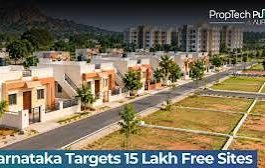
BENGALUR : In one of the largest land-based housing commitments by any Indian state this year, Karnataka Chief Minister D.K. Shivakumar has reaffirmed a target of distributing 15 lakh residential sites across the state, alongside rural development projects worth ₹16,000 crore. The announcements were made on Friday, 20 November, at the Banquet Hall of Vidhana Soudha while launching the Chief Minister’s Rural Road Connectivity Scheme and the Chief Minister’s Rural Development Scheme.
Housing: 5 lakh sites in Phase One
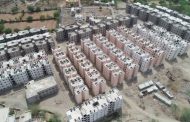
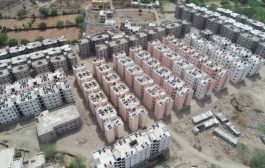
According to the Chief Minister, the first phase will cover five lakh sites, for which roughly 9,000 acres of land have already been identified. Before finalising layouts, the government will work out the cost of providing roads, drains and other basic infrastructure to these sites. The overall plan, first outlined in September, envisages about 50,000 sites per district, rolled out in three phases of five lakh each.
The real reform: plot size goes from 20×30 to 30×40
The most significant policy change for the housing sector is the Cabinet’s decision to raise the minimum size of sites allotted to poor families from 20×30 feet (600 sq ft) to 30×40 feet (1,200 sq ft) — effectively doubling the land per household. Shivakumar argued that smaller plots become inadequate as families grow, and that the state must avoid creating new slums. He added that larger plots could be given where needed, even if it reduces the total number of sites, and that homeless families will get priority while those who already own a house or site will be excluded.
₹16,000 crore for rural roads and panchayats
₹10,000 crore for around 15,000 km of rural roads — re-asphalting, gravel roads and drains — at an estimated ₹38 lakh to ₹70 lakh per km depending on the work.
₹6,000 crore for panchayat-level infrastructure such as drainage and drinking water, released with Deputy Commissioners’ approval.
Mandatory tendering, geo-tagged before-and-after photographs and videos, and monitoring through a Chief Minister’s Dashboard to curb bogus billing.
The Chief Minister cited an expert report indicating that nearly half the state’s population has already shifted from villages to cities, a share projected to rise sharply. Better roads, water, schools and jobs in villages, he said, are meant to reduce that pressure on urban centres.
Clean titles: Bhoo Guarantee and Khata drive
On property documentation, the Bhoo Guarantee scheme will prioritise correction of rural property records and issue of Khata documents. The government says about two crore people could resolve A-Khata and B-Khata issues, with officials directed to verify each property door-to-door, block fake registrations and set up dedicated counters at panchayats.
PMC View: What this means for real estate
1. Land, not just houses. A site-based model shifts construction to the beneficiary. Its success will depend on access to affordable home loans and convergence with schemes such as PMAY so that plots do not remain vacant. Karnataka has already signalled it may take back allotted sites left unbuilt for five years.
2. Planning before plotting. Linking layouts to a costed infrastructure plan is the right sequence. Plots without roads, drainage and water become tomorrow’s unplanned settlements — exactly what the 30×40 decision aims to prevent.
3. Titles unlock value. Regularising Khata records for crores of rural owners brings property into the formal credit system, enabling mortgages, legal transfers and, over time, a healthier housing finance market in Tier-3 and rural Karnataka.
4. Demand spillover. Large-scale site allotment and ₹10,000 crore of road works will lift demand for cement, steel, local contractors and building materials, and can create new peri-urban growth corridors around district towns.
5. Execution is everything. Land identification, beneficiary verification and transparent allotment will decide whether this becomes a model for other states or another target on paper. The emphasis on geo-tagging, tendering and dashboards is encouraging — the industry will watch the Phase One rollout closely.
The bigger picture
Karnataka’s move comes as India’s housing story increasingly runs on two tracks — strong premium demand in the metros, and an urgent need for affordable, well-planned shelter for the urban and rural poor. Under PMAY-Urban and PMAY-U 2.0, about 1.25 crore houses had been sanctioned nationally by August 2026. State-led land programmes like Karnataka’s could add a crucial layer: giving families secure, adequately sized land on which to build their future.
Bottom line: Bigger plots, planned infrastructure and clean titles together make this one of the more structurally sound affordable-housing announcements of 2026 — provided the state delivers on the ground.
This article is written by Ai Powered PMC Akbar Jiwani, Special Correspondent: Realestate for Realnewsofindia.com. Akbar Jiwani is Founder & Principal Consultant of Universal Buildtech Development (UBD), an MSME-certified PMC with 35+ years of Mumbai real estate and redevelopment experience.
Suggested tags: Karnataka housing, 15 lakh housing sites, affordable housing, D.K. Shivakumar, rural infrastructure, Bhoo Guarantee, Khata, PMAY, real estate India
Sources consulted: ANI via webindia123 (21 Nov 2026); ThePrint/PTI (Sept 2026); New Kerala (Sept 2026); Deccan Herald; Spherical Insights (PMAY-U data).