
Written by Ai Powered PMC Akbar Jiwani
Special Correspondent: Realestate for Realnewsofindia.com
One-bedroom flats of about 25 sq m, a Rs 2 lakh contribution and a 10-year lock-in are among the key features of the policy now published in the Delhi Gazette.
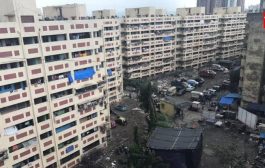
NEW DELHI, 6 November 2026: The Delhi government has notified its Slum and Jhuggi-Jhopri (JJ) Rehabilitation and Relocation Policy, 2026, putting in the Gazette (on 4 November, per UNI and Aryan Age reports) a framework that could reshape land use and affordable housing in the national capital. The policy, finalised in June at a high-level meeting chaired by Union Home Minister Amit Shah, relies heavily on public-private partnership (PPP) redevelopment of the 675 JJ clusters recognised by the Delhi Urban Shelter Improvement Board (DUSIB).
Cut-off date moved from 2015 to 2025
The most consequential change is eligibility. Chief Minister Rekha Gupta, who chairs DUSIB, announced on 23 June, after the board’s 36th meeting, that the cut-off year for rehabilitation would move from 1 January 2015 to 1 January 2025. Households in clusters established before that date can now qualify, widening the pool of beneficiaries considerably.
Scale of the exercise
IANS reporting puts the recognised JJ clusters at 675, spread over roughly 804.5 hectares, with about 3.06 lakh slum dwellings. About half the clusters sit on DDA land, with the rest on other government, public, private, MCD and DUSIB land. South-East Delhi has the most clusters (144), followed by North (109) and Central (92). Estimates of the people affected vary by source, from about four lakh households to around 20 lakh residents. About 50,000 unoccupied flats built earlier in outer areas are also to be renovated and allotted.
What eligible families get
Housing: One-bedroom flats of about 25 sq m with a living room, kitchen, bathroom, toilet and balcony. One house per eligible family.
Location: Priority to the original site or within a 3 km radius; otherwise elsewhere in Delhi.
Contribution: Rs 2 lakh in total, reported as Rs 1.5 lakh towards alternative housing and Rs 50,000 towards common-area maintenance for the first five years, both open to government revision.
Tenure: Leasehold initially, with a 10-year lock-in on sale or transfer; ownership transfer after 10 years without conversion charges.
Protection: Dwellings of eligible households cannot be demolished until alternative accommodation is provided.
Who is eligible
Applicants must be Indian citizens aged 18 or above, living in a cluster established before 1 January 2025, pass residential verification and Aadhaar biometric authentication, and hold at least one of ten listed documents (such as a ration card, electricity bill or passport) issued before the cut-off. Families owning a permanent house anywhere in India and government employees, including retired ones, are excluded. Those declared ineligible have 30 days to appeal, with delayed appeals allowed for up to 180 more days.
PPP model at the centre
Developers will build multi-storey housing for qualified residents, with commercial development on part of the land helping to cross-subsidise reconstruction. Officials have indicated that at least five PPP rehabilitation projects will be bid out every month, with DDA and DUSIB preparing tenders for 50 more clusters. Early rehabilitation is expected in areas including Mayur Vihar, Seelampur, Pitampura, Sultanpuri and Lajpat Nagar. Chief Minister Gupta has framed the effort under the banner “Jahan Jhuggi Wahi Makan” (a home where the jhuggi stands).
Why it matters for real estate
For developers, the policy opens a pipeline of in-situ redevelopment projects on prime urban land with cross-subsidy economics. For the city, it is one of the largest slum redevelopment drives attempted in a single metro. Execution risks remain: transparent verification, timely tenders, and developer appetite on thinner-margin sites will decide whether timelines hold.
Editor’s note: Reports differ on the policy’s exact title, the number of beneficiaries and the flat’s minimum versus maximum carpet area; figures here are as reported by the sources below and should be checked against the Gazette text before publication.