
Arvind Kejriwal should send a thank you note to the BJP. But for the BJP’s strategy of treating the Delhi election like a war and exaggerating its political importance, Kejriwal would have been struggling to rise from the debris of Varanasi.
Only a few days ago the BJP won an election in Jharkhand, where nobody even knew the name of its chief ministerial candidate or the name of its principal adversary. Before that it quietly went about its task of pocketing Maharashtra and Haryana.
Till late December, the BJP appeared to be toasting to yet another victory in Delhi. Opinion polls suggested that the AAP would be decimated; TV channels and newspapers were not even talking about Kejriwal and the nationwide perception was that Delhi would fall in Modi’s basket like a ripe mango.
Barely a month later, Kejriwal is riding the popularity charts, the AAP is getting closer and closer to the BJP and the saffron party is in complete disarray.
With the benefit of hindsight, it can be argued that the BJP made a big mistake by investing too much, too early in this election and turning it into a high-stakes game.
Delhi, after all, is a small state. Its chief minister – it wouldn’t matter if he were to be re-designated as mayor – has limited powers. Until Sheila Dikshit became the CM, politicians used to look down upon the job and prefer a role at the Centre. (Sushma Swaraj, a reluctant CM in 1998, resigned her Assembly seat and returned to national politics in 1999).
First, it made the blunder of sending Prime Minister Narendra Modi to take on Kejriwal at the very beginning. The right strategy, perhaps, would have been to let local leaders spar with Kejriwal and then let Modi deliver the knock-out punch.
Modi started too early and erred in targeting Kejriwal, a strategy that was in stark contrast to his ploy of ignoring the AAP leader during the Lok Sabha polls.
When Modi attacked Kejriwal, calling him a Naxalite who should be externed to a jungle, he immediately raised the stakes in Delhi, converting it into a contest between an invincible PM and a vulnerable wannabe. (Simultaneously suggesting that the Congress is out of the race, a message that helped AAP).
The PM’s rally at Delhi’s Ramleela Maidan, appears to be the turning point of the 2015 election. Till then, the Delhi election was a low-key affair being fought quietly in the gali-mohalla of the Capital.
But Modi’s rally raised the profile of the battle. It revived the interest of the media, which in turn, took it to drawing rooms outside Delhi. Within days, the whole country’s attention was riveted.
Now, there was no turning back or lowering of stakes for the BJP.
No honour is big enough for a fighter to be challenged be somebody who is bigger, better and more powerful, especially when everybody is watching. So, Kejriwal, who has excellent understanding of the importance of theatrics, tamasha, TV and twitter in an election, pounced on the opportunity.
Nobody knows whether Modi’s rally was a flop show or how many people attended it. But the AAP cleverly created the impression that Modi failed to draw a large crowd and his popularity is on the wane.
The AAP won half of the battle when it succeeded in conveying that Modi’s magic is not working in Delhi. For, everything the BJP has done since has been correlated with the ‘failure’ of Modi’s rally and, ergo, a desperate attempt to salvage the BJP campaign.
Kiran Bedi, for instance, was always meant to be the BJP’s choice for Delhi CM. In April 2014, party’s Delhi in charge Nitin Gadkari revealed his hand when he tweeted Bedi would be the BJP’s spearhead. (http://timesofindia.indiatimes.com/city/delhi/Kiran-Bedi-to-be-Delhi-CM-candidate-tweets-Gadkari/articleshow/33795096.cms). Though the BJP distanced itself from the tweet, Gadkari himself never denied it.
But the timing of Bedi’s induction into the BJP added fuel to the AAP campaign that Modi needed someone else to lead the campaign, even if only to be made the scapegoat for a defeat.
And now that the Bedi magic is not working-at least the surveys suggest she has failed to make an impact-the BJP is sending more warriors to take on Kejriwal.
As reported by firstpost earlier, the party has deputed finance minister Arun Jaitley to oversee the poll campaign. In addition, several high-profile Cabinet ministers have been asked to hold rallies and deal with Kejriwal’s questions and allegations.
But this is just the advance guard. Another army is working on the sidelines.
The BJP has asked 120 of its MPs and most of its chief ministers, except Vasundhara Raje who has been conspicuously benched, to campaign in Delhi’s streets and manage booths on the polling day.
The MPs have been given charge of specific constituencies. Om Birla, the Kota parliamentarian who was seen outside Bedi’s home during Ravish Kumar’s NDTV interview with the BJP’s chief ministerial candidate, is looking after Krishna Nagar. In addition, he has been asked to contact voters from his area in Delhi and convince them to vote for the BJP.
The PM, his cabinet colleagues, BJP CM’s, 120 MPs and the RSS cadre, this, essentially, is the nature of the force lined up by the BJP to crush Kejriwal.
The BJP may claim that there is nothing extraordinary about sending such a large and high-profile contingent to campaign. But, it had not unleashed a similar force in Jharkhand, Jammu and Kashmir or even Haryana, to fight the polls. Even Maharashtra looked like a mock drill compared with the war in Delhi.
Obviously, Delhi is special for the BJP. And the party doesn’t want to lose the election at any cost.
Some of its concerns are justified. A defeat in Delhi would strip the BJP of its aura of invincibility, expose Amit Shah as a mere mortal, deflate the enthusiasm of Modi’s supporters and leave a strategically important place to a bellicose street fighter like Kejriwal who has the potential to create a lot of trouble for the Modi government.
No, the BJP doesn’t want to lose Delhi and certainly not to Kejriwal.
An underdog owes his entire existence and legend to his rival. In the 2006 film 300, Leonidas wouldn’t have been considered a hero if he had fought a smaller army or a lesser king. But the Persian king Xerxes turned him into a hero by sending his entire army and best fighters to crush Leonidas.
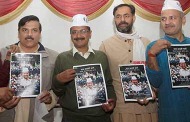
The Aam Aadmi Party has released a 70-point manifesto ahead of the Delhi polls on 7 February, with heavy emphasis on electricity and water, the cornerstones of its hugely successful 2013 assembly election campaign that saw the party win 28 seats.
Despite its short lived and disastrous stint in power in Delhi, the party has clearly recognised that the issues on which it campaigned remain as relevant to voters as ever, and has therefore come back with a promise to deliver effectively. AAP chief Arvind Kejriwal has already apologised to voters for stepping down as Chief Minister after a mere 49 days in power.
The manifesto, which the party tweeted out from its official handle, includes a promise to a comprehensive performance audit of electricity companies by the CAG, and pledge to fulfill its 2013 Delhi manifesto promise of providing consumers the right to choose between electricity providers. It has also vowed to reduce electricity bills by half.
In terms of water, the party says that it is “committed to clamping down on Delhi’s powerful water mafia working under the patronage of political leaders, and ensure the “firm implementation of the HC order that entitles Delhi to extra raw water from Haryana in Munak canal”
Here are the tweets relating to water and electricity:
4. Aam Aadmi Party government will keep its promise of reducing electricity bills by half. #AAPKaManifesto
– Aam Aadmi Party (@AamAadmiParty) January 31, 2015
6. AAP will put Delhi’s own power station at the pithead nd comprehensively solve Delhi’s electricity problem in long run. #AAPKaManifesto
– Aam Aadmi Party (@AamAadmiParty) January 31, 2015
7. #AAP reiterates the 2013 Delhi manifesto promise of providing consumers right to choose between electricity providers. #AAPKaManifesto
– Aam Aadmi Party (@AamAadmiParty) January 31, 2015
7. #AAP reiterates the 2013 Delhi manifesto promise of providing consumers right to choose between electricity providers. #AAPKaManifesto
– Aam Aadmi Party (@AamAadmiParty) January 31, 2015
8. AAP will facilitate a phased shift to renewable and alternate sources of energy like Solar Energy. #AAPKaManifesto
– Aam Aadmi Party (@AamAadmiParty) January 31, 2015
9. AAP will provide Water as a Right. It will provide access to clean drinking water to all of Delhi at an affordable price #AAPKaManifesto
– Aam Aadmi Party (@AamAadmiParty) January 31, 2015
10. #AAP will ensure free lifeline water of up to 20 kiloliters (20,000 liters) to every household per month. #AAPKaManifesto
– Aam Aadmi Party (@AamAadmiParty) January 31, 2015
11. AAP will provide universal access to potable water to all its citizens of Delhi at a sustainable and affordable price. #AAPKaManifesto
– Aam Aadmi Party (@AamAadmiParty) January 31, 2015
12. AAP will ensure firm implementation of the HC order that entitles Delhi to extra raw water from Haryana in Munak canal #AAPKaManifesto
– Aam Aadmi Party (@AamAadmiParty) January 31, 2015
13. Our government will preserve and replenish local and decentralized water resources to augment Delhi’s water resources. #AAPKaManifesto
– Aam Aadmi Party (@AamAadmiParty) January 31, 2015
14. AAP is committed to clamping down on Delhi’s powerful water mafia working under the patronage of political leaders. #AAPKaManifesto
– Aam Aadmi Party (@AamAadmiParty) January 31, 2015
15. Several steps will be taken to revive the Yamuna including sewer treatment and control affluent discharge. #AAPKaManifesto
– Aam Aadmi Party (@AamAadmiParty) January 31, 2015
Other key points in the manifesto include a promise to push for full statehood for Delhi, a plan to revamp admission procedure for nursery and KG through a centralized online system, and a pledge to install CCTV cameras in DTC buses, bus stands and in crowded places as a deterrent against crime.
AAP’s manifesto comes even as the BJP released a ‘vision document’ instead of a manifesto of its own, a move that was attributed to indecision over Delhi statehood. Therefore, it is significant that the AAP document has specifically mentioned that it would push for full statehood.
On one hand, senior party leader Harsh Vardhan, who was the head of manifesto committee, had suggested a promise to include full statehood but chief ministerial candidate Kiran Bedi and others were wary of disturbing the status quo.
“We have to be pragmatic. How can we give full statehood to Delhi? There will be issues of multiplicity of power, land ownership and law and order,” a senior party leader told The Indian Express.
The manifesto also comes even as the latest opinion polls project that AAP could well win the Delhi election.
According to an ABP-Nielsen survey, 50 percent of those polled were likely to vote for the Kejriwal-led party, up 4 percent from the last survey conducted by the agency in the second week of January.
The BJP has since swung into damage control mode, deputing a ‘man to man’ football strategy to combat AAP leaders, and bringing down central ministers to campaign for the party on a state level.
Aam Aadmi Party chief Arvind Kejriwal speaks to NDTV on the controversy over two crores in donations from dodgy companies.
Following are the highlights of the interview:
- Allegations of hawala funding attempt to malign us
- Does hawala money come by cheque?
- We vetted all the four companies and the payments
- We don’t check balance sheet of each donor
- PAC vetted donations by the four allegedly bogus firms
- Let us discuss the politics of it
- Hang us if we’re guilty, we are not shying away from investigation
- This whole effort is to show AAP is like everyone else
- BJP says 2500 crores have come from unknown sources. No one is questioning them on their sources
- We take payment through cheques, what else can we do?
- I’m not saying everyone else in the other political parties is corrupt. There are some good people there too
- We collected VAT of Rs 1000 crores and gave 300 crores as subsidy… that’s a gain of 700 crores
New Delhi: Aam Aadmi Party (AAP) leader Yogendra Yadav on Monday said the adverisements of the Bharatiya Janata Party (BJP) and an interview given their chief ministerial candidate for Delhi Kiran Bedi will be enough to reduce his party’s workload.
The truth is that if BJP gives such advertisements everyday and one television interview by Kiran Bedi , our work will reduce. Everyone will come to know what they are,” said Yadav.
“I am surprised that the BJP got this advertisement approved. Using the word “baniya” for Arvind Kejriwal has created a huge controversy. Are they allowed to give such advertisements? People of Delhi will answer this on February 7,” he added.
Earlier, the AAP demanded a public apology from the BJP for the advertisement and said they would file a complaint with the Election Commission. The ad contains a caricature of Kejriwal who swears on his children that he would never join hands with the Congress.
The ad also reportedly refers to him as belonging to a ‘boisterous’ gotra.
Political parties have criticized the BJP, even though it has gone silent on the matter.
ANI
New Delhi: Exuding confidence that his party will come to power in Delhi, AAP chief Arvind Kejriwal on Monday said the BJP has pressed the “panic button” and was now resorting to “politics of poison” to avoid a defeat.
Five days ahead of the voting to the 70-member Delhi assembly, Kejriwal predicted that Congress will not win even a single seat which will obviate the need for him to take that party’s support as he had done in 2013 to form his short-lived 49-day government.
The significance of election in Delhi went far beyond its borders and that was why the BJP was fielding its “big guns” for the campaigning, the former Delhi Chief Minister told PTI in an interview.
“They have pressed the panic button and that is why you see all these big guns campaigning for the party,” he said and accused them of resorting to personal attacks against him, his family and the community he belongs to. “This shows their (BJP’s) desperation and frustration,” he said.
Referring to an attack on a South Delhi church this morning, he said this was in keeping with the pattern adopted by BJP in Uttar Pradesh where the electorate was polarised at the time of last year’s Lok Sabha elections and by-polls.
“This is what is the politics of BJP. They will try to polarise the society… We do politics of love and affection and they (BJP) do politics of poison,” he said.
Responding to Prime Minister Narendra Modi’s argument that it would be good to have a BJP government in Delhi which will work in tandem with BJP-led government at the Centre, he said he would work with Modi in a “constructive” spirit if his party comes to power.
On his rival chief ministerial candidate BJP’s Kiran Bedi, with whom he worked closely during Anna Hazare’s anti-graft agitation, Kejriwal said if she becomes Chief Minister, she will be like Manmohan Singh in the Congress party without a voice.
He also said that the former IPS officer was fit for police and not for Chief Minister’s post.
PTI

In a recent advertisement published by BJP,have made personal attacks on Arvind Kejriwal and his family.
According to recent post of AAP has in return made a biter reply by commenting: BJP does not have the confidence to openly debate issues with Arvind Kejriwal and nor do they have a manifesto, since BJP has no agenda in Delhi.
BJP’s only campaign point is to personally malign and target Arvind Kejriwal.
AAP wants BJP to openly come out for a public debate which they claim BJP has been avoiding all the time.
The competition between the two parties is getting more intense with BJP’s MPs and MlA’s all entering the last leg of the campaign. The exit polls rating have been fluctuating by the day.
A team of our RNI reporters who are present in Delhi right now have interviewed people in Delhi from all walks of life. The majority of them favour AAP to BJP.
http://youtu.be/P3uMMGCinmQ
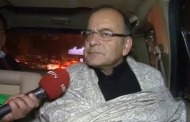
New Delhi: Kiran Bedi, recently missing in the BJP’s Delhi election posters, has got an important thumbs up from top leader and finance minister Arun Jaitley who has defended the party’s decision to pick her as its chief ministerial candidate.
“Kiran Bedi is an excellent choice. She is an iconic police officer with an impeccable track record. She is a bit unconventional, but Delhi needs a leader like her,” Mr Jaitley told NDTV after a busy Friday that saw him hold a two-hour meeting at the Delhi BJP office and address a public meeting in west Delhi.
Amid jitters in the party over Ms Bedi’s candidacy as the key elections enter the last lap, and worry that several of the BJP’s top Delhi leaders are in deep sulk over Ms Bedi being chosen, national leaders like Mr Jaitley have hit the campaign trail.
 Mr Jaitley, who is also busy preparing the union budget to be presented on February 28, admitted that it is important for the BJP to win this election, which comes after the Modi government has been in power for eight months. “Each election is a barometer. This election will be a test for the credibility and performance of the BJP government. Though I will say that all elections are not a referendum,” he said.
He dismissed reports of infighting and sulks among members of the Delhi BJP, and said that a letter written by Delhi BJP president Satish Upadhyay to party members on Friday not to remain inactive was more to motivate those who were denied ticket.
He also brushed aside reports of differences between top state leaders over the demand for full statehood for Delhi. Sources in the BJP say that while Kiran Bedi favours a dilution in the demand, the man who she replaced as the presumptive Chief Minister, Dr Harshvardhan wanted a firm promise on full statehood included in the manifesto. The BJP had to drop the idea of releasing a manifesto.
Mr Jaitley said, “we aren’t talking about statehood as it is not an issue in this election. The issue this time is governance vs anarchy. But if there is a consensus the key element of statehood – law and order – can be given to the state government.”
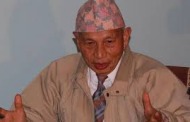
Ghisingh, architect of Gorkhaland stir, dead
For almost 20 years since he quit the Army in 1966, Ghisingh moved from door to door explaining the need for a homeland and an Indian identity. He studied history, used it in his campaign, and sometimes even misinterpreted it to suit his argument. In the late sixties, he floated a party named “Neelo Jhanda” (Blue Flag) that exhorted people to identify themselves as “Nepali.” He despised the word Gorkha as a symbol of slavery. For some time, he flirted with the Labour Congress and after Emergency, he joined Jagjivan Ram’s Congress for Democracy.
It was in 1980 that Ghisingh, a Buddhist who worshipped Shiva more than any other deity, turned radical. On April 7 that year, he founded Gorkha National Liberation Front (GNLF) with the slogan “We can forgive a snake but not a person who opposes Gorkhaland.” He banned the use of Nepali as the name of the community, saying it would blur their distinction from Nepali nationals.
In its initial years, GNLF confined its agitation to election boycotts and street corner meetings. Its campaign got a big boost when hundreds of Nepali families were expelled from Meghalaya in March 1986. Coinciding with Nepali New Year (April 13), Ghisingh launched an armed struggle to end the “genocide” of the Nepalis. “Just as there will be no morning until the stars are gone, there will be no Gorkhaland until we do not become martyrs,” he would often say as he plunged the picturesque Darjeeling hills and the Dooars into turmoil. Beheadings, kidnappings, ambushes and arson became the order of the day. He himself suffered serious injuries in an assassination bid on February 10, 2001. State terrorism under the garb of TADA added more to bloodletting.
As Bengal’s Marxist government armed its Nepali cadres, the hills witnessed fratricidal war that led to the killing of more than 1,200 people, burning of thousands of homes and uprooting of nearly 1,00,000 citizens. Normalcy returned after 28 months on August 22, 1988 when GNLF, the Bengal government and the Centre signed a pact on the formation of Darjeeling Gorkha Hill Council. But reason and peace deserted Darjeeling for good. Parties that opposed him tooth and nail now uphold his controversial views on the statehood demand and the 1950 India-Nepal Treaty of Peace and Friendship, which, he claimed, dilutes the identity of Nepali-speaking Indians.
Like most Nepalis, Ghisingh loved and revered Darjeeling as “a war medal won by his brave forefathers.” This maybe because of the fact Darjeeling, like Garhwal, Kumaon and Kangra, was part of Nepal till the 1814-16 Anglo-Gorkha War. But he could never live in his beloved Gurkhathum (Gorkha bastion, another name for Darjeeling occasionally used by the British) after his former protege and Gorkha Janmukti Morcha chief, Bimal Gurung resumed the Gorkhaland agitation in the spring of 2007. He lived in forced exile in the plains for years and could not even take his wife, Dhanmaya, to Darjeeling, for her last rites.
Born into a family of tea garden workers at Manju near the Nepal border on June 22, 1936, Ghisingh was an accomplished novelist and painter.
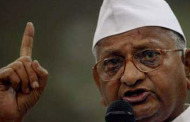
New Delhi: Aam Aadmi Party Friday took a swipe at the BJP for its newspaper advertisement, in which Anna Hazare’s cartoon has been shown with a garland, prompting AAP chief Arvind Kejriwal to cheekily ask whether the saffron party had “killed” the veteran anti-corruption crusader.
In a series of tweets today, AAP chief Kejriwal said, “Nathuram Godse killed Gandhiji on this day in 1948. BJP has killed Anna in its ad today. Shudn’t BJP apologise?”
In the advertisement, BJP has also shown Kejriwal’s cartoon in which he is promising not to take support from Congress, but he has been shown to have done “marriage” with Congress.
In another tweet, Kejriwal asked his supporters to be vigilant, saying ‘To all AAP volunteers n supporters. Evil forces will try to divert ur (your) attention. But pl (please) stay focused on positive agenda for Delhi.”
“AAP is forming govt in Delhi. Get ready to serve Delhi and to make it safe for women,” Kejriwal said in another tweet.
Again he tweeted, “I will always pray for well being and good health of Annaji”.












Recent Comments