Article by AI Powered PMC Akbar Jiwani, Special Correspondent – Real Estate, for Realnewsofindia.com
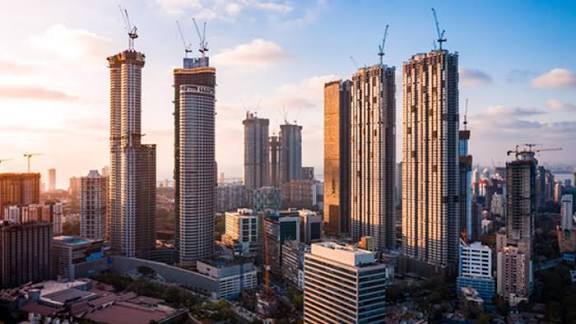
Mumbai has cemented its place among the world’s most resilient luxury housing markets, with prime residential prices climbing 6.2 per cent year-on-year in the April–June quarter of 2026, according to Knight Frank’s latest Prime Global Cities Index. The growth places India’s financial capital 8th out of the 46 cities tracked globally — more than twice the 2.6 per cent average price growth recorded across all cities in the index.
The city also posted a 1.7 per cent quarter-on-quarter rise, signalling sustained momentum at the top end of the residential market even as global luxury housing growth remains comparatively subdued.
Mumbai was not India’s only representative in the global top 20. Bengaluru ranked 12th with prime home prices up 4.5 per cent annually, while the national capital, New Delhi, came in at 17th with 3.9 per cent growth. All three Indian cities featured among the world’s top 20 prime residential markets in the latest edition of the index — a strong showing that underscores the depth of high-end housing demand across the country.
Where India Stands Globally
Tokyo topped the global rankings by a wide margin, with prime residential prices soaring 50.7 per cent over the year, followed by Manila (14.6 per cent), Dubai (10.9 per cent) and Singapore (9.5 per cent). Nairobi, Christchurch and Seoul rounded out the top seven with gains of 8.5 per cent, 6.9 per cent and 6.4 per cent respectively, just ahead of Mumbai in eighth place. Vienna (5.9 per cent) and San Francisco (5.0 per cent) completed the top ten.
At the other end of the spectrum, Beijing recorded the steepest annual decline among tracked cities at 8.4 per cent, followed by Toronto (down 7.3 per cent), Wellington (down 5.4 per cent) and London (down 3.6 per cent). Globally, the overall average growth rate stood at 2.6 per cent, up from 2 per cent in the previous quarter, reflecting an uneven, two-speed recovery in prime residential markets worldwide.
“Depth of Demand at the Top End,” Says Knight Frank India Chief
Commenting on the findings, Shishir Baijal, International Partner, Chairman and Managing Director, Knight Frank India, said Mumbai’s position among the top ten global prime residential markets was significant given the more measured pace of global price growth this quarter.
“The city’s 6.2% annual growth reflects the depth of demand at the top end of the market, where location, quality, and differentiated residential offerings continue to support values,” Baijal said, adding that prime residential assets in Mumbai remained closely linked to long-term wealth creation and limited supply.
Liam Bailey, Knight Frank’s Global Head of Research, noted that the latest results pointed to a modest improvement in global luxury housing conditions overall, while cautioning that local supply dynamics, currency movements, wealth creation trends and interest rate trajectories would continue to shape the performance of individual markets in the quarters ahead.
What It Means for India’s Real Estate Growth Story
The findings add to a growing body of evidence that India’s premium and luxury housing segment continues to outperform the broader residential market, even as overall home sales growth across the country is widely expected to moderate this fiscal year amid affordability pressures at the mass-market end. Industry watchers say Mumbai’s limited land supply, continued infrastructure upgrades and sustained interest from high-net-worth and ultra-high-net-worth buyers have kept the city’s luxury corridor — spanning South Mumbai, Bandra-Worli and the western suburbs — resilient to the broader slowdown seen in entry-level and mid-income housing.
With Bengaluru and New Delhi also holding their own in the global rankings, the latest Knight Frank data reinforces India’s growing weight in the global prime residential conversation — a trend likely to draw continued attention from developers, institutional investors and policymakers tracking the health of the country’s real estate sector through the rest of 2026.