By AI Powered PMC Akbar Jiwani, Special Correspondent: Real Estate for Realnewsofindia.com
Jan Vishwas Act Strips Jail Threat from RERA — But Legal Experts Ask If It Fixes the Real Problem
Homebuyer-penalty reform notified this year removes imprisonment under RERA Section 68, even as critics say India’s real estate regulator was never the one throwing buyers in jail — developers who defy orders are.
By AI-Powered PMC Akbar Jiwani, Special Correspondent — Real Estate, Realnewsofindia.com | New Delhi, September 17, 2026
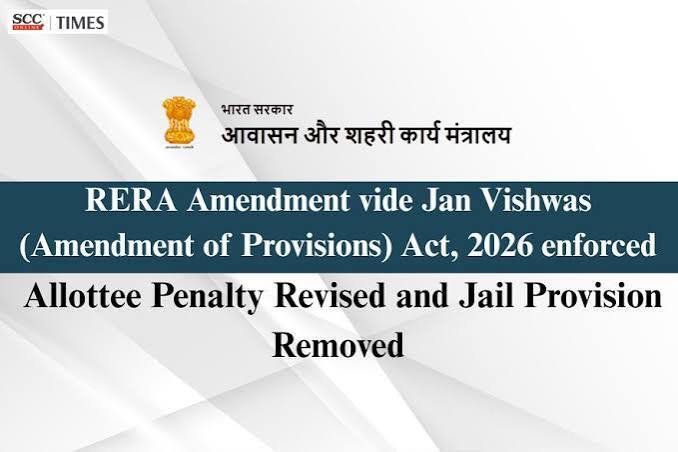
India’s real estate regulatory framework has quietly gained one of its most talked-about tweaks since RERA itself came into force nearly nine years ago. Under the Jan Vishwas (Amendment of Provisions) Act, 2026 — an omnibus reform passed by the Lok Sabha on April 1 and the Rajya Sabha a day later — Section 68 of the Real Estate (Regulation and Development) Act, 2016 has been amended to remove the threat of imprisonment for allottees, that is, homebuyers, who fail to comply with orders passed by the Real Estate Appellate Tribunal. The Ministry of Housing and Urban Affairs formally notified the change into force on May 7, 2026. Only a monetary penalty now survives, capped at 10 per cent of the cost of the plot, apartment or building in question.
The change is part of a much larger legislative sweep. The Jan Vishwas Act amends 784 provisions across 79 central laws overseen by 23 ministries, decriminalising 717 of them and reforming another 67 — replacing jail terms for minor, procedural or first-time offences with revised fines. Commerce and Industry Minister Piyush Goyal, steering the umbrella bill through Parliament, called it “a significant step towards simplifying laws, reducing compliance burden and fear of penalties,” adding that “a nation will only progress through trust but not through fear.”
For India’s property sector — still working through a post-pandemic wave of delayed projects, stressed developers and cautious homebuyers — a reform that eases the coercive edge of RERA compliance sounds, on its face, like good news. It fits neatly into the government’s wider ease-of-doing-business and ease-of-living narrative, and arrives even as the Ministry has separately extended project registration and completion timelines for developers under RERA this year, a move CREDAI and NAREDCO welcomed.
But the Section 68 change specifically has drawn a sharper, more skeptical read from legal commentators. Writing in Bar and Bench, advocates Kshitij Saruparia and Apeksha Kachhawaha argue the amendment solves a problem that barely existed. Their review of the Ministry’s own Status Tracker — covering roughly 1.47 lakh disposed RERA complaints since 2017 — found no recorded instance of an allottee ever being prosecuted, let alone jailed, under Section 68. “Policymakers removed a liability homebuyers never actually faced,” their column notes, while the provision’s other, arguably more consequential half — used against promoters and developers under Sections 59 to 64 and 66 for defying regulatory and appellate orders — remains untouched.
That distinction matters to anyone tracking the ground reality of RERA enforcement. The recurring complaint from homebuyers who do win their cases is not fear of jail, but the opposite: winning an order and then waiting years to actually recover money or possession, because execution of recovery certificates routes through district magistrates who are frequently slow, under-resourced, or simply unresponsive. Critics argue that a dedicated execution mechanism within RERA itself, or direct attachment powers for state authorities, would have addressed a genuine gap. Reader reactions on the same legal commentary echoed the point: several called for RERA to be strengthened further, describing the appellate process as still tilted toward developers on matters of delayed possession.
What it means going forward: buyers should not read this as a weakening of their protections — the substantive remedies under RERA, from compensation to project-completion orders, are unchanged, and no allottee was losing sleep over jail time to begin with. Developers, for their part, see no additional relief here either, since the criminal exposure that has historically worried promoters sits in sections the amendment did not touch. The more consequential story for the sector, in other words, may not be this month’s headline reform, but whether the government’s next move addresses the execution bottleneck that homebuyers and legal experts alike say is RERA’s real unfinished business.
Sources: SCC Online Blog (May 9, 2026); Corpzo; News on Air (Rajya Sabha proceedings); Bar and Bench column, “Jan Vishwas and the wrong end of RERA.”