


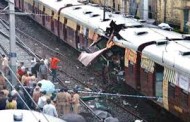
Twelve persons have been convicted for their involvement in the 2006 serial blasts in Mumbai that killed over 180 persons. The trial has been on now for the last nine years.
While initial reports said five had been convicted, reports later said that 12 of the 13 accused have been convicted while one person has been acquitted.
The accused convicted by the court are: Faisal Shaikh, Ali Bashir Khan, Mohammad Ali, Majid Shafi, Sajid Ansari, Kamal Ansari, Ethesham Siddiqui, Zameer Shaikh, Sohail Shaikh, Muzammil Shaikh, Tanvir Ansari and Naved Hussain.
The accused were convicted under the stringent Maharashtra Control of Organised Crime Act (Mcoca), special public prosecutor Raja Thakre said.
Abdul Shaikh was the only accused to be acquitted by the court, reported CNN-IBN.
“Arguments on sentencing of the accused will take place on Monday,” Thakre said.
Here’s everything you need to know about the case:
The blasts
Seven blasts in crowded Mumbai local trains took place on the evening of 11 July 2006 in which a total of 189 persons were killed. Over 820 people were injured in the blasts.
The blasts took place at Mahim and Matunga in central Mumbai and at Khar, Bandra, Jogeshwari, Mira Road and Borivali in the northern suburbs. All the blasts took place on the Western Railways line of the city’s suburban rail network.
The blasts were allegedly engineered using a mixture of RDX and ammonium nitrate. The explosive mixture was allegedly packed into seven bags which were then placed in trains leaving from Churchgate in south Mumbai for the suburbs. The bombs were planted in the first class coaches of the trains.
AFP imageAFP image
The accused and the alleged plot
The Maharashtra Anti-Terrorism Squad had arrested 13 persons for their alleged involvement in the case. The police has said that the accused were linked with terror group Lashkar-e-Taiba and banned group Students Islamic Movement of India (SIMI).
They are: Faisal Shaikh, Ali Bashir Khan, Mohammad Ali, Majid Shafi, Sajid Ansari, Kamal Ansari, Ethesham Siddiqui, Zameer Shaikh, Sohail Shaikh, Muzammil Shaikh, Tanvir Ansari, Naved Hussain and Abdul Shaikh. One of the accused, said to be a Pakistani, allegedly died in the blasts.
The police has said that the bombs were assembled at Mohammed Ali’s house by the accused, along with Pakistani nationals.
Former Mumbai police commissioner AN Roy, at the time of filing of the chargesheet, had said that there were allegedly 14 people involved in the planting of the bombs.
“They were divided into seven teams, each consisting of a Pakistani national and an Indian national. We have arrested five out of the seven Indian nationals. One out of the seven Pakistanis died at the blast site, while we have asked for the other six who are reportedly hiding in Pakistan to be externed,” Roy was quoted as saying in a Mumbai Mirror report.
All 13 have been charged under sections of the Maharashtra Control of Organised Crime Act (MCOCA), Indian Penal Code, Unlawful Activities Prevention Act, Explosives Act, Railway Act, Passport Act and Prevention of Damage to Public Property Act. They face a maximum punishment of the death penalty.
The 13 accused have been in prison for seven years already as the trial against them has proceeded.
The police has also named 15 others in the chargesheet in which Lashkar-e-Taiba’s Pakistan-based leader Azeem Cheema has been named as the prime conspirator.
Trial so far
The verdict is set to come a year after special judge YD Shinde concluded the trial. At the time he had declared that the judgement could be announced on 19 September, 2014.
The prosecuting agency, state Anti Terrorism Squad (ATS), had examined 200 witnesses in the case against 13 accused, while the defence lawyers examined a total of 40 witnesses.
The ATS has filed a chargesheet that runs into over 10,000 pages.
Special public prosecutor Raja Thakare, who appeared for the ATS in this case, said the court must be ensuring that all the evidence and arguments of both the prosecution and defence is covered in the judgment and there are no loose ends.
“During the trial, we (prosecution and defence lawyers) submit a lot of evidence and judgments in support of our arguments. All that has to be perused and considered by the judge before passing judgment. It is a huge task,” Thakare told PTI.
The controversies
The pressure cooker factor: The first controversy in the trial came thanks to a statement made well the chargesheet was filed. When announcing the arrests in the case in 2006, former police commissioner AN Roy had said that the bombs used in the blasts were packed into pressure cookers which were then planted on the trains.
However, the pressure cooker theory was later found missing in the chargesheet in the case. The police justified its absence saying that they had mentioned “household items” in the chargesheet. But at the end of the trial, the special public prosecutor told the court that pressure cookers “could have been used”. This, despite the fact, that none of shopkeepers from where the cookers were allegedly bought were examined by the prosecution during the trial.
Torture: The accused in the case have accused the police of torture in order to extract confessions. Confessions are admissible as evidence under Mcoca. Two of the accused filed an application before the court accusing the police of torture. Media outlet Gulail had released interviews with some of the accused using hidden cameras in which the Mumbai Police was accused of torture. Here’s the video:
The police has argued that the claim of torture is part of the Al-Qaeda manual on terrorism and the accused are merely following it.
The Indian Mujahideen factor: In 2008 the Mumbai police claimed to have confessions from three members of terror group Indian Mujahideen, who said they had carried out the blasts. Sadiq Shaikh, Arif Shaikh and Mohammed Saif claimed that the explosives had been procured by Indian Mujahideen chief Riyaz Bhatkal. The bombs were allegedly assembled at a house in Sewri before they were placed on trains.
Bhatkal, who was later arrested, claimed that the blasts were carried out by the group to avenge the 2002 Gujarat riots. Bhatkal allegedly claimed that explosives were brought in from Karachi, which was smuggled into India. It was then allegedly taken to Azamgarh and transported to Mumbai by two persons where the bombs were assembled. The ATS, however, stuck to its stand on the 13 accused and has not included the alleged Indian Mujahideen as accused in the case.
The call data records: The accused have claimed call data records for many of them punch holes in the police theory about the blasts. The defence has shown call data records to indicate that four of the accused were nowhere near where the police has claimed they were.

MUMBAI: The state government, in a cabinet meeting on Wednesday, decided to impose a ‘drought surcharge’ on a host of items ranging from fuel and liquor to cigarettes and jewellery to raise Rs 1,600 crore for affected farmers. The new taxes will come into effect from Wednesday midnight.
Finance minister Sudhir Mungantiwar said the new tax system will be in place for the next five months till February-end, after which the government will rationalize it.
Political experts dub it a new trend set by the BJP-led state government and fear it may continue in future too.
A surcharge of Rs 2 per litre would be levied on petrol and diesel in Mumbai. Its impact will be lower in rural areas as the local body tax (LBT) was scrapped in the remaining 27 corporations across the state on Wednesday; here, prices will rise by up to 50 paise. Sales tax on liquor, cigarettes and aerated soft drinks will be hiked by 5%, and VAT on gold, diamonds and jewellery by 0.2%.
hike in taxes, Mungantiwar sai the state has increased taxes on items such as liquor, cigarettes and aerated soft drinks that are not essential but considered a luxury.
“In the past six months, the state government has taken a decision for the welfare of the common man, especially distressed farmers. But following the hike in taxes, the government will be able to raise Rs 1,600 crore. People of Maharashtra are sensible enough to bear the hike for the sake of farmers,” said Mungantiwar.
The state had scrapped LBT for traders with less than Rs 50 crore turnover from August 1, 2015. “This had come as a relief as prices of most goods reduced. No LBT was levied on liquor, cigarettes and soft drinks. We have, therefore, decided to increase the sales tax by 5% on these items. After five months, during the budget session, we will rationalize the tax system and come up with a long-term policy on the Goods and Services Tax (GST),” Mungantiwar added.
Asked whether it was the only option left for the government, he said, “In the past six months, people had benefited from withdrawal of value-added tax on petrol as prices fell by Rs 3.41. Petrol prices later dropped further by Rs 2.11 following the international crude crisis. People have gained over Rs 1,000 crore from this reduction. Now, since the state budget is overburdened, we had no other option left but to go for a tax hike.”
The finance minister said the state had to bear a monthly revenue loss of Rs 300 crore per month due to a reduction in fuel prices. “Even after increasing the petrol prices, the rate of tax in Maharashtra—at 27%—is lower than in a few other states such as Andhra Pradesh (39.56%), Madhya Pradesh (32.3%), Rajasthan (32.68%), Punjab (36.38%), Karnataka (32.30%) and Kerala (34.24%). At the same time, LBT on petrol and diesel has been scrapped across the state.”
The state, he said, has to bear a burden of more than Rs 3,330 crore. This includes Rs 1,072 crore for loss of crop, Rs 421 crore compensation to farmers hit by unseasonal rain, Rs 20 crore for repair of their homes, Rs 690 crore for crop insurance, Rs 60 crore for interest waiver on farmers’ loans, Rs 117 crore for restructuring of loans, and Rs 950 crore for distribution of wheat and rice at Rs 2 and Rs 3 in 14 districts of drought-affected areas of Marathawada and Vidarbha under the food security bill scheme.
Meanwhile, more than 40 petrol and diesel dealers and pump owners in Navi Mumbai said they are awaiting further directions from the state government on scrapping of LBT.
“At present, there is some confusion over the fuel rates, as the Rs 2 surcharge was announced today. However, earlier this month, the state government did announce that the LBT charges would go,” said a Vashi-based dealer. B Rasal of an Airoli-based petrol pump said, “If the LBT is removed, then the prices will fall by 3.5%, which is significant. However, we are awaiting written orders.”
Currently, rates of petrol and diesel at Navi Mumbai are Rs 67.61 per litre and Rs 52.58. So, if the LBT factor is removed, the rates will fall to Rs 65.24 per litre and Rs 50.73 per litre, respectively.

MUMBAI: The city witnessed its second hottest September day in a decade on Tuesday with the IMD’s Santacruz observatory recording the maximum temperature at 36.2 degrees Celsius. The all-time record was in 2014 when the maximum temperature recorded on September 30 was 37 degrees Celsius.
But this cannot be termed as October heat since officially the monsoon has not yet withdrawn from the city . Residents said they have been feeling uneasy for the past few days with the maximum temperature rising. On Monday , the maximum temperatures recorded in Colaba and Santacruz were 31.8 degrees and 34.8 degrees respectively . But on Tuesday , the maximum witnessed a rise. It was 32.9 degrees in Colaba, which is 1.7 degrees above normal, and it was 36.2 degrees, which is 4.7 degrees above normal in Santacruz.
V K Rajeev of the Regional Meteorological Department said, “The monsoon has withdrawn in Rajasthan and parts of Gujarat, but not yet in Mumbai. The heat the city is witnessing is due to the absence of rain for a long time, and winds which are coming from the land, instead of the sea. The lack of moisture is another reason for the rise in temperature.The effects of the October heat have started to be felt.”
Mumbai has not witnessed significant rain in September.Humidity levels in Colaba were 76% and in Santacruz 62% on Tuesday . The IMD has forecast cloudy skies for the next 24 hours.
King’s Circle resident Nikhil Desai said it had been getting uncomfortably hot for two days. “Suddenly , there is a need to use the air-conditioner at home during the daytime too. But citizens are responsible for this climate change by cutting trees, causing emission of pollutants, wherein even before the monsoon has withdrawn, one is witnessing tremendous heat,” said Desai, adding that the transition from the monsoon to post-monsoon season can lead to one feeling uncomfortable as the body is not used to such high temperatures.
The monsoon this year has not been very strong throughout the four months. The rainfall recorded this year by the Colaba observatory was 1,604.8mm and in Santacruz 1,823.2mm.The deficient rainfall in the case of Colaba is 444.7mm and in Santacruz it is -403mm.

A Pakistani-origin man in Germany admitted to killing his daughter after he found out that she had shoplifted condoms from a store to have sex with her German boyfriend.
Abdullah Khan strangled his 19-year-old daughter after she continued seeing her German boyfriend whom Khan did not approve of.
The father and his wife said that their daughter Lareeb had started staying away from home for several nights and had stopped wearing her hijab (headscarf). One day they received a letter from the police saying Lareeb was caught trying to steal condoms, it is then when they decided to act on the matter.
Khan admitted to strangling his daughter with his hands. After she was dead, Khan’s wife Shazia dressed her in her clothes and then they put her in a wheelchair and took her to a secluded embankment in Germany and tipped her off it, according to reports.
The father said that he killed her because she brought ‘dishonour’ to the family by getting involved with a boy he did not approve of. Khan and his wife are originally from Pakistan and are currently on trial for murder at the State Court in Darmstadt.
People in large numbers in Pakistan-occupied Kashmir (PoK) are protesting against the Pakistani establishment and demanding freedom, in a video available with a leading news channel.
The video which is exclusively available with CNN-IBN shows people protesting in several areas including Muzaffarabad, Gilgit and Kotli, with the protesters shouting pro-india slogans.
ome protestors have also said on camera that Pakistan has no right to use force on them and even that India is better place to live. In the video, they are also heard demanding jobs and other rights.
The video shows that anti-Pakistan protests are on the rise in PoK and the Pakistani force is using brutal force to shut their voices.
The report said that the protest can’t be called sporadic, as the swelling crowd, and the police and Army presence to reign them in is a clear indicator that these agitations are not a one-off but a force to reckon with.
Pakistan recently cancelled the NSA-level talks with India claiming that no peace process can be initiated without Kashmir being discussed.

In comments likely to enhance his progressive reputation, Pope Francis has written a long, open letter to the founder of La Repubblica newspaper, Eugenio Scalfari, stating that non-believers would be forgiven by God if they followed their consciences.
Responding to a list of questions published in the paper by Mr Scalfari, who is not a Roman Catholic, Francis wrote: “You ask me if the God of the Christians forgives those who don’t believe and who don’t seek the faith. I start by saying – and this is the fundamental thing – that God’s mercy has no limits if you go to him with a sincere and contrite heart. The issue for those who do not believe in God is to obey their conscience.
Robert Mickens, the Vatican correspondent for the Catholic journal The Tablet, said the pontiff’s comments were further evidence of his attempts to shake off the Catholic Church’s fusty image, reinforced by his extremely conservative predecessor Benedict XVI. “Francis is a still a conservative,” said Mr Mickens. “But what this is all about is him seeking to have a more meaningful dialogue with the world.”
“Sin, even for those who have no faith, exists when people disobey their conscience.”
In a welcoming response to the letter, Mr Scalfari said the Pope’s comments were “further evidence of his ability and desire to overcome barriers in dialogue with all”.
In July, Francis signalled a more progressive attitude on sexuality, asking: “If someone is gay and is looking for the Lord, who am I to judge him?”
In a welcoming response to the letter, Mr Scalfari said the Pope’s comments were “further evidence of his ability and desire to overcome barriers in dialogue with all”.
In July, Francis signalled a more progressive attitude on sexuality, asking: “If someone is gay and is looking for the Lord, who am I to judge him?”

Prime Minister Narendra Modi on Sunday addressed the Indian diaspora in San Jose, California and said that there had been a change in the mindset of the people across the world as they were now saying that the 21st century belongs to India.
Here are top quotes from PM Modi’s speech
1. Your fingers created magic on the keyboard and the computer and this gave India a new identity. Your skill and commitment is wonderful.
2. I have faith in the nation because India is youthful. 65% of our population is under the age of 35.
3. We are harbingers of peace. We come from the land of Gandhi & Buddha.
4. Terrorism is terrorism. There is no good terrorism and bad terrorism.
. UN still hasn’t been able to define terrorism. If it will take so much time to define, how will we tackle it?
6. From Upanishads we have moved to Upgraha. India succeeded in its Mars Mission in the very first attempt.
7. Today, the world looks at India with hope and confidence.
8. I am trying my best to live up to everyone’s expectations.
9. Brain drain can become brain gain, did anyone ever think about this. That’s why I have a different outlook towards this. I see it as ‘Brain Deposit’, out to look for opportunities. When that comes this brain will give back to India with interests.
10. Am I working? Am I working for nation? Am I fulfilling promises?
11. Who brought this change? This change was not by brought by Modi, but 125 crore Indians.
12. We are moving ahead with ‘JAM of all’, where ‘J’ stands for Jandhan account, ‘A’ for Aadhar Card and ‘M’ for Mobile governance.
TII students have called off their relay hunger strike, although the strike in the elite institution will continue. Students are protesting the appointment of Gajendra Chauhan as chief of FTII.
The agitating FTII students on Saturday had said they would withdraw their hunger strike to pave way for a dialogue with the government if the I&B Ministry confirm a date for talks to resolve their demands including removal of actor Gajendra Chauhan from the institute’s chairmanship. Joint Secretary of I&B Ministry has now replied to the letter sent by students. A meeting has been fixed on 29th September at Films division, Mumbai. The three students have called off their hunger strike, out of which Himanshu had completed 400 hours of his strike.
The FTII students’ Association (FSA) leader Vikas Urs said on Saturday, “We have responded to the Ministry’s letter dated September 24, in which it requested us to withdraw (107 day) strike and hunger strike (17 day) to create a conducive environment for a dialogue. We have offered to withdraw our ongoing hunger strike if the government confirms a date and venue for the proposed meeting.” He said the FSA had always kept the channels of communication with the government open and expressed its willingness to have a dialogue to resolve the issues raised by them, including setting up of a transparent mechanism for appointments on the Film and Television Institute of India (FTII) governing body.
The students had been on a relay hunger strike in batches of three as part of intensification of their agitation.
Prime Minister Narendra Modi spoke at the Silicon Valley during his second visit to the US. This marked the first time an Indian prime minister has visited the IT and technology hub in thirty years.
Modi met with the who’s who of the technology world, including Google’s Sundar Pichai, Microsoft’s Satya Nadella, Apple’s Tim Cook, Qualcomm’s Paul Jacobs, Adobe’s Shantanu Narayen.
Here’s are a few quotes from Modi’s speech at Silicon Valley that show just how in-sync he is with new technology and the times.
And, I know to achieve the vision of Digital India, the government must also start thinking a bit like you.
1) I have met many of you in Delhi and New York, and on Facebook, Twitter and Instagram. These are the new neighbourhoods of our new world.
2) Google today has made teachers less awe-inspiring and grandparents more idle. Twitter has turned everyone into a reporter.
3) The status that now matters is not whether you are awake or asleep, but whether you are online or offline.
4) The most fundamental debate for our youth is the choice between Android, iOS or Windows.
5) From computing to communication, entertainment to education, from printing documents to printing products, and, now to internet of things, it’s been a long journey in a short time.
6) From cleaner energy to better healthcare and safer transport, everything is converging around the work you do.
7) In Africa, it’s helping people transfer money on phone. It has made reaching small island states no longer a journey of adventure, but a convenient click of a mouse. A young professional in San Francisco can Skype daily to comfort her sick grandmother in India.
8) The pace at which people are taking to digital technology defies our stereotypes of age, education, language and income.
9) Customers, more than creators, are defining the use of a product.
10) I see technology as a means to empower and as a tool that bridges the distance between hope and opportunity. Social media is reducing social barriers. It connects people on the strength of human values, not identities.
11) Technology is forcing governments to deal with massive volume of data and generate responses, not in 24 hours but in 24 minutes.
12) I spoke of E-Governance as a foundation of better governance – efficient, economical and effective. I now speak of M-Governance or mobile governance. That is the way to go in a country with one billion cell phones and use of smart phones growing at high double digit rates.
13) Building I-ways are as important as highways.

As India celebrates 50 years of the 1965 war this month, the Indian Chinese who were hauled off to Rajasthan’s Deoli camp remember the ordeal of another war
“Meresss awalon kaaaa jawab do…!” Ying Sheng Wong, 70, is doing a pretty good job of hollering that peremptory refrain from the hit film Maine Pyar Kiya in his somewhat disjointed Hindi, and the Indian Chinese gathering around him in Toronto crowds erupt in laughter and applause. But the reason they have banded together is not at all cheery.
They call themselves the Deoliwallahs, 60 men and women with some really tragic stories to tell about a tumultuous phase of Indian history. The year was 1962, and between October and November, India and China were caught in a short but intense war. So acrid was the anti-Chinese sentiment in India that a whole lot of perfectly innocent Indian Chinese, mostly in the Dooars and Assam, were surprised by its savagery. Some had married local women, and most spoke only local languages. They were more Indian than Chinese with businesses and lives firmly entrenched here. Suddenly, they became potential “traitors”. Soon, under a new ordinance, the midnight knocks began to be heard across the homes of Indian Chinese, especially those living in Darjeeling, Tinsukhia and Shillong. Entire families were bundled into trucks and transported to railways stations where began a seven-eight day train journey to an abandoned PoW camp at Deoli, Rajasthan. In some cases, the families were separated: the men deported to China, mother and children stuck in Deoli, the grandparents elsewhere, say accounts.
The war wrapped up in a month but many of those interned remained in the jail for up to five years. When the families returned, they found their homes and businesses confiscated and plundered. Some of them tried to cobble their lives back together but many left for the West, mostly Canada and the US. Now, 53 years later, these survivors and their families are trying to find some answers, and perhaps an apology for that painful episode that turned their world upside down.
On October 6, at Delhi’s India International Centre, some of these Deoliwallahs will be participating in an event recalling the events of 1962. The dramatic story of the Deoli internment and the suffering it caused has been surfacing in many forms in recent years. The survivors have formed a very active and vocal Association of India Deoli Camp Internees 1962 (AIDCI). Earlier this year, Beyond Barbed Wires: A Distant Dawn, a documentary by Indian photojournalist Rafeeq Ellias that tells the story of the internees, was released.
Another Deoliwallah, Yin Marsh, 66, an artist from California, wrote Doing Time with Nehru two years ago on her life in Darjeeling as a child before the war of 1962 and of her family’s internment at Deoli. Joy Ma, another participant at the IIC event, is writing her memoirs. And before all that, five years ago, there was ‘Makam’, the Assamese bestseller by Rita Chowdhury on the Indian Chinese community in Tinsukhia which saw many tragedies in the wake of the war.
It may all seem very distant in history, but the unfairness of being made victims of a war that wasn’t theirs still rankles. “I was just six but what I do remember is the look on my parents’ faces when we were led into the train. It was a look of disbelief, hurt, grief, fear. I didn’t know what it meant then but today, it hits me really hard,” says Michael Cheng, 59, who now runs a restaurant in North Carolina.
Cheng’s father had migrated to Darjeeling from Guangdong and set up a chain of flourishing businesses – a shoe store, a restaurant, a lodge. He was big on the horse racing circuit and owned a horse. All that came to an end for the family of 13 in 1962. When the Cheng family was released, they were simply dropped off at Chinatown in Kolkata and ordered not to return to Darjeeling. Kind relatives took the family in and Cheng recalls sleeping on an ironing board. Slowly the Chengs put their shoe business together, and by the ’70s managed to return to Darjeeling. But it was never the same again, and the Chengs migrated to the West. “My brother who still misses India often says ‘I wish this war never happened’,” says Cheng.
Wong was much older when he was taken to the camp along his six siblings, just a day after the war ended. At 17, he recalls the humiliation of the three years at the camp, the heat, the terrible food and the aftermath. His father, who came from the Wangchu in Canton, was running Attun and Sons, a popular shoe shop at GS Road in Shillong. He died a painful and mysterious death at the camp at age 48.
“After we were released, we got Rs 1.50 every day till we reached Shillong to feed ourselves and we would only spend 50 paise on food.” The shoe shop reappeared as Latest Footwear in Burra Bazar but the fear of fresh hostilities never went away and the family moved to Canada.
Journalist Joy Ma, who was actually born at the Deoli camp, says the saddest aspect of the events of 1962 was how well assimilated the Chinese community in India was. “Even today, at the family shrine, some people keep paan and beedi as offerings to ancestors like they did back home in India. They were part of local communities, married to local Indian or Nepalese women; many hadn’t even set foot in China,” she says.
Her family were prosperous furniture contractors in the Dooars, and the ignominy of having to be dependent for every little thing at the camp hurt deeply. “People were told it was a short trip and they would return soon so they didn’t take much along. The camp was not ready for so many. When they first arrived, some had put out their shirts for the dal to be ladled into,” Ma says.
The survivors and their families, still trying to make sense of the events that tore their lives apart, are hoping for a small memorial at Deoli to make sure that the episode is not forgotten.
Courtesy- Darjeeling Times









Recent Comments